
THREE CANYONS OF SUYKUTAMBO: NATURAL WONDER OF SOUTHERN CUSCO
In a remote area of southern Cusco, the forces of time and water have shaped an imposing and almost unknown landscape. Deep canyons, rivers flowing between enormous rock walls, and an untouched Andean environment make the Three Canyons of Suykutambo a stunning natural destination, ideal for those seeking authentic places off the traditional tourist routes.
¿What are the Three Canyons of Suykutambo?
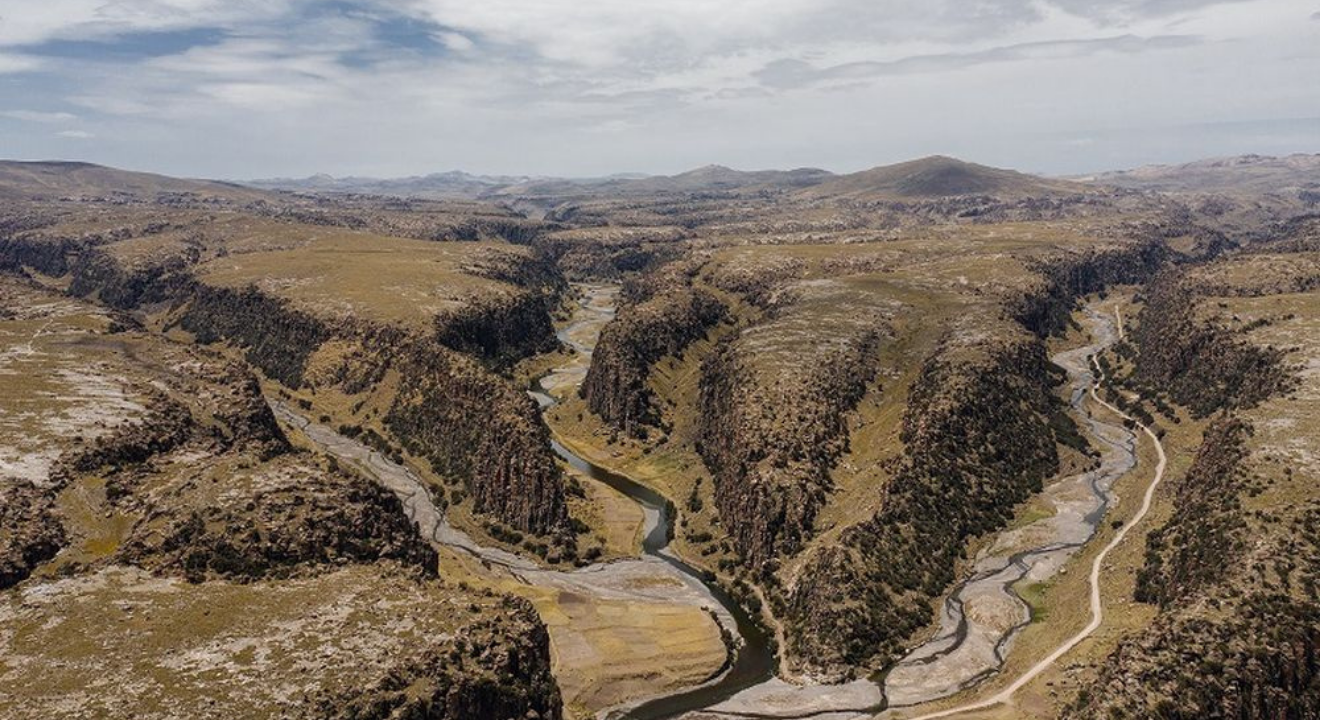
The Three Canyons of Suykutambo are an impressive natural spectacle that captivates visitors to southern Cusco. This wonder was formed by the constant force of the Apurímac, Callumani, and Cerritambo rivers, which over thousands of years have carved enormous rock walls and narrow corridors through the mountains.
The terrain combines volcanic and sedimentary rock, creating abrupt formations that seem to guard the valley. The canyons offer unique panoramic views, where sunlight transforms the colors of the rocks and reveals the rugged beauty of the Andean landscape. Its isolation has allowed the area to maintain a pure and tranquil character, far from mass tourism, making it ideal for photography, hiking, and connecting with nature.
Location
The Three Canyons of Suykutambo are located in the district of Suykutambo, Espinar province, Cusco region, in a remote Andean area where the confluence of the Apurímac, Callumani, and Cerritambo rivers has formed deep canyons with imposing rock walls and little-explored natural landscapes.
Altitude and Distance
The Three Canyons of Suykutambo are situated at an approximate altitude of 3,500–3,600 meters above sea level and about 250 kilometers south of the city of Cusco, considering the road route.
¿How to get to the Three Canyons from Cusco?
To reach the Three Canyons of Suykutambo, you must first arrive in Cusco, the capital of the ancient Inca Empire. From the city of Cusco, access is by land heading south through the Andean landscapes and rural areas.
The journey begins at the Huayruropata Bus Terminal, where buses depart for the province of Espinar (Yauri). The trip takes approximately 4 to 5 hours, depending on traffic and road conditions.
Once in Espinar, continue the journey to the district of Suykutambo. For this segment, you can take a taxi or local transport, with an estimated travel time of 45 minutes to 1 hour. From the center of Suykutambo, access to the Three Canyons is by vehicle or a short walk to the natural viewpoints of the area.
In total, the trip from Cusco to the Three Canyons can take between 6 and 8 hours, so it is recommended to leave early and bring warm clothing, water, and cash for the journey.
Climate in the Three Canyons of Suykutambo
The climate in the Three Canyons of Suykutambo is cold and dry, typical of the high Andean sierra, with abrupt temperature changes between day and night.
- Daytime temperature: between 10°C and 18°C, with strong solar radiation.
- Nighttime temperature: can drop to 0°C or below, especially in the dry season.
- Dry season (April to October): sunny days, clear skies, and very cold nights; it is the best time to visit.
- Rainy season (November to March): frequent rain, slippery paths, and cloudy skies, although the landscape appears greener.
When to visit the Three Canyons of Suykutambo
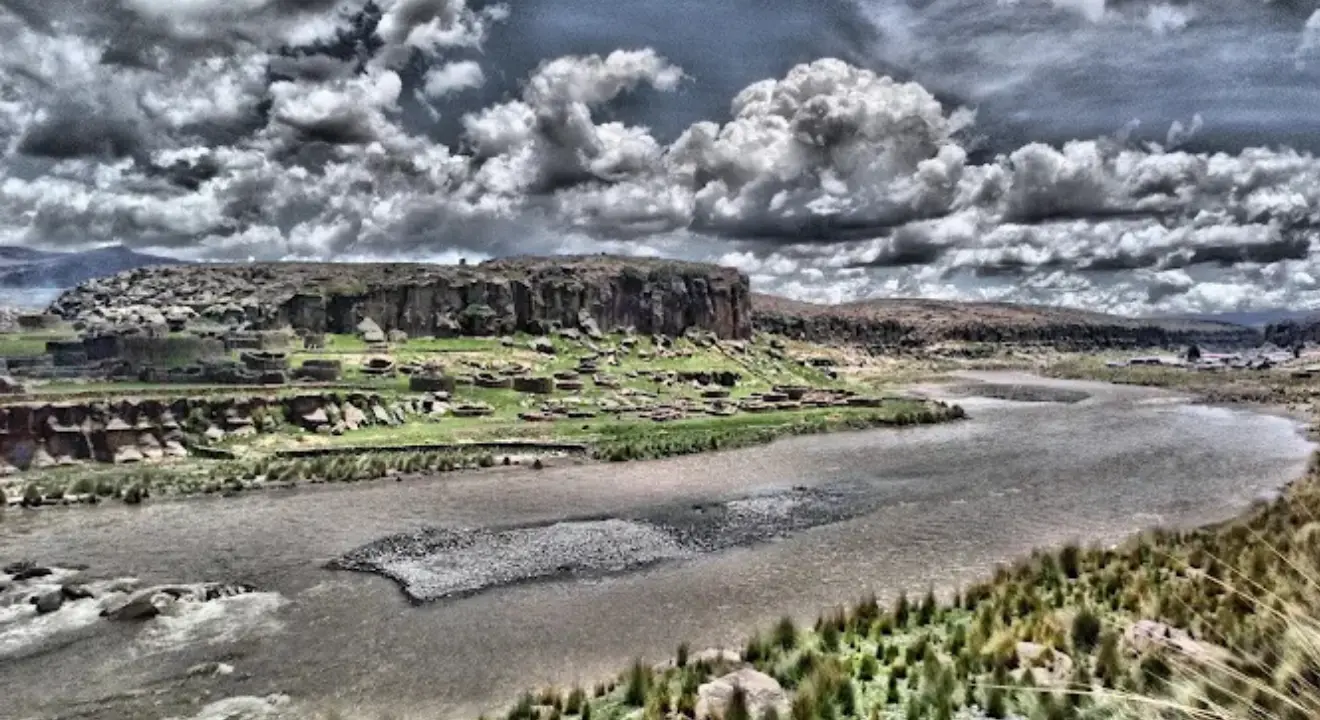
The best time to visit the Three Canyons is during the dry season, from April to October. During these months, the weather is more stable, there is less rain, and the trails are in better condition, allowing for safer enjoyment of the landscapes and viewpoints. The most recommended months are May, June, and July, when days are usually sunny and canyon views are clearer. During the rainy season, from November to March, access may be more difficult due to constant precipitation.
The Three Canyons: Regional Conservation Area
The Three Canyons of Suykutambo were recognized as a Regional Conservation Area by the Ministry of Environment (MINAM) on August 28, 2017, with the aim of protecting and preserving the biodiversity and ecosystems of this Andean area.
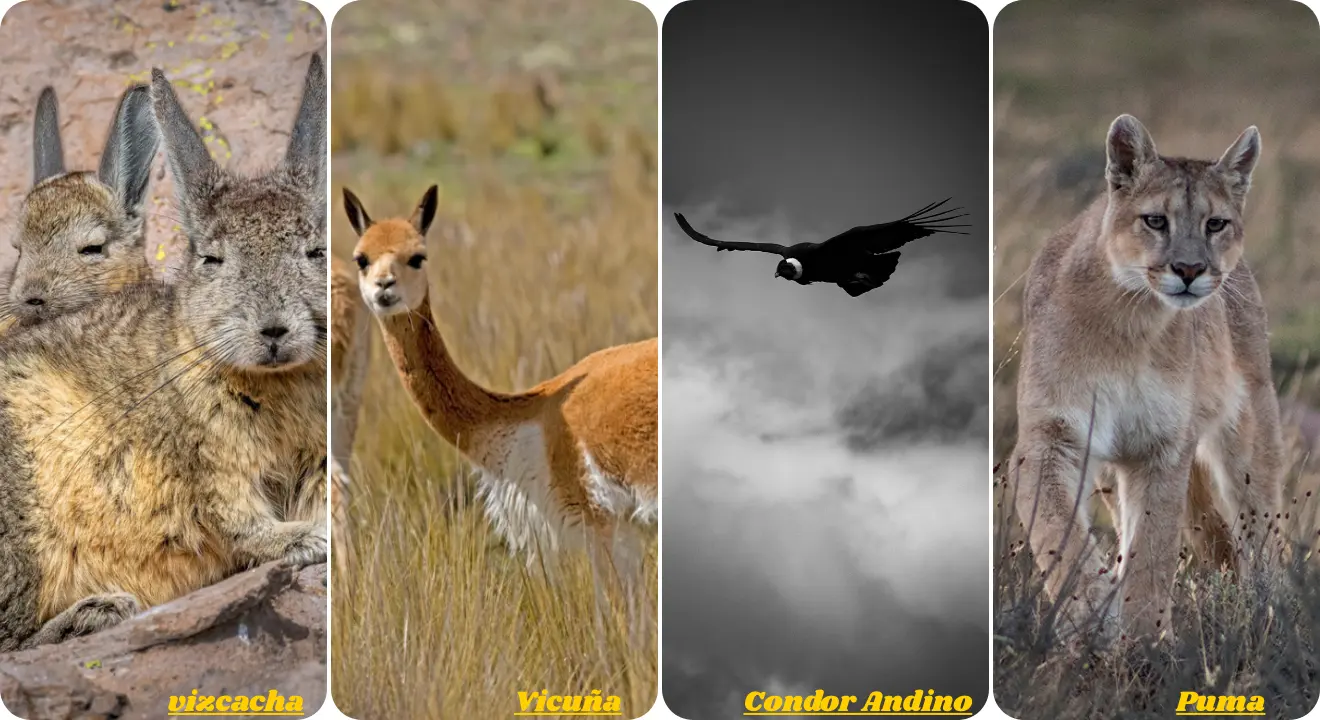
This area is home to emblematic and vulnerable species, such as the Andean condor, taruca, puma, vizcacha, and Puya Raimondi, which face threats due to human activity. Additionally, llamas and vicuñas are commonly observed, forming part of the natural and cultural landscape of the surroundings.
Three Canyons of Suykutambo: History, Culture, and Nature
1. Ancestral heritage of Suykutambo
Long before Inca rule, the area of the Three Canyons of Suykutambo was already inhabited by cultures such as the Wari and Qolla, and later by the Incas, who considered this territory a sacred space. In caves, hills, and surrounding areas, remains of pottery, structures, and possible ritual spaces have been identified, confirming the cultural and spiritual importance of the area over time.
2. Sacred traces on the cliffs
On some cliffs and rock formations, engravings and marks can be observed that may correspond to petroglyphs or ceremonial symbols. Although these elements have not been studied in depth, local inhabitants preserve them with respect, passing their meaning through oral tradition, which has allowed the historical memory of the place to endure.
3. How the Three Canyons were formed
The Three Canyons originated millions of years ago as a result of geological processes on volcanic formations. The constant action of the Apurímac, Callumani, and Cerritambo rivers, combined with Andean uplift and natural erosion, shaped deep canyons and natural corridors, giving rise to the current landscape.
4. The natural grandeur of Suykutambo
The convergence of these three canyons has created an environment of high rock walls that seem to protect the valley. Although vegetation is limited, the combination of light, shadow, and color on the cliffs creates a changing visual spectacle throughout the day, making this place one of the most striking landscapes in southern Cusco.
Traveler tip
In the Three Canyons of Suykutambo, cellphone signal is very weak or nonexistent, so it is recommended to download offline maps or notify someone before going. In Espinar, there is mobile and internet coverage, so you can take advantage before entering the area.
Attractions in the Three Canyons of Suykutambo
The Three Canyons offer much more than an impressive landscape; it is a place where nature and history meet, creating a unique setting for lovers of adventure, photography, and archaeology. The main attractions include:
1. Devil’s Throat (Rock formations and cliffs):
The vertical canyon walls were sculpted by the erosion of the Apurímac, Callumani, and Cerritambo rivers over millions of years. Some rocks display textures and tones that change according to sunlight, while others form curious natural shapes that seem to guard the valley. These cliffs are ideal for those who enjoy geology and rugged landscapes.
2. Converging Rivers:
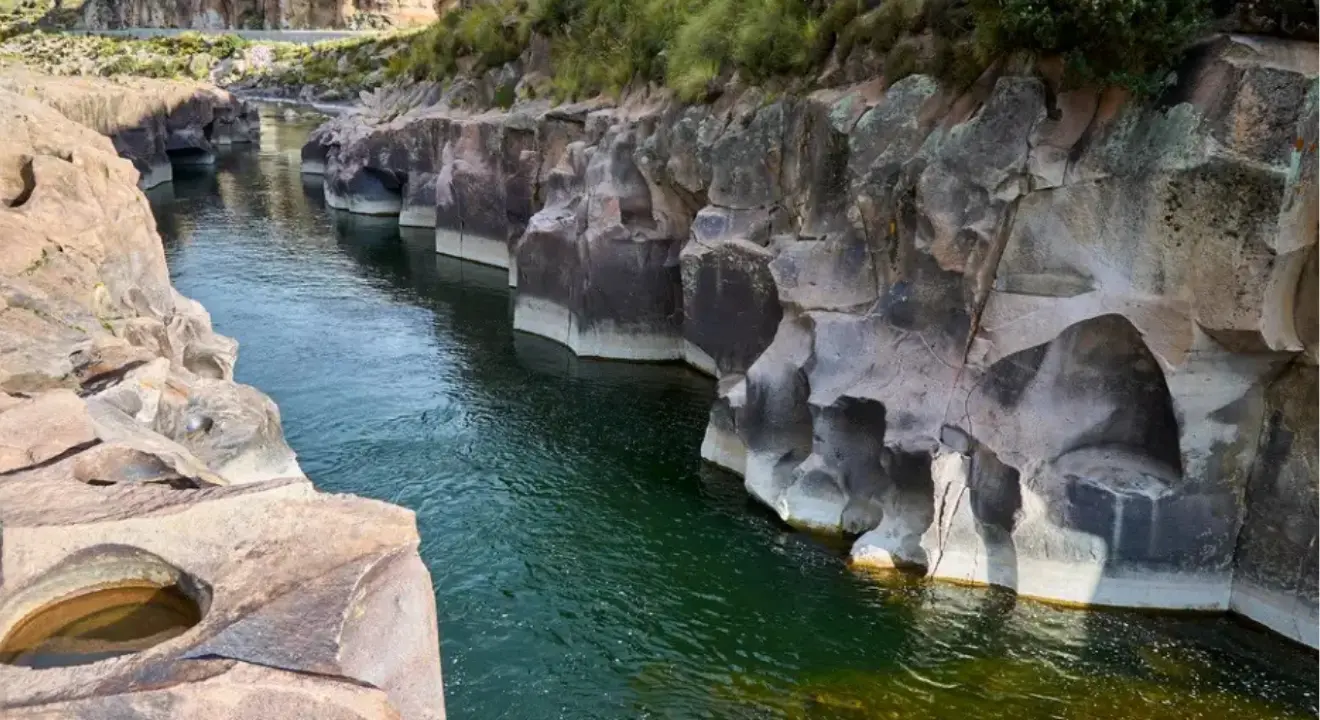
The meeting of the three rivers creates a convergence of currents and crystal-clear waters, forming rapids and whirlpools that captivate visitors. It is a perfect spot for observing aquatic ecosystems, and the dynamics of the waters provide an immersive sound that enhances the feeling of isolation and tranquility.
3. Andean Fauna:
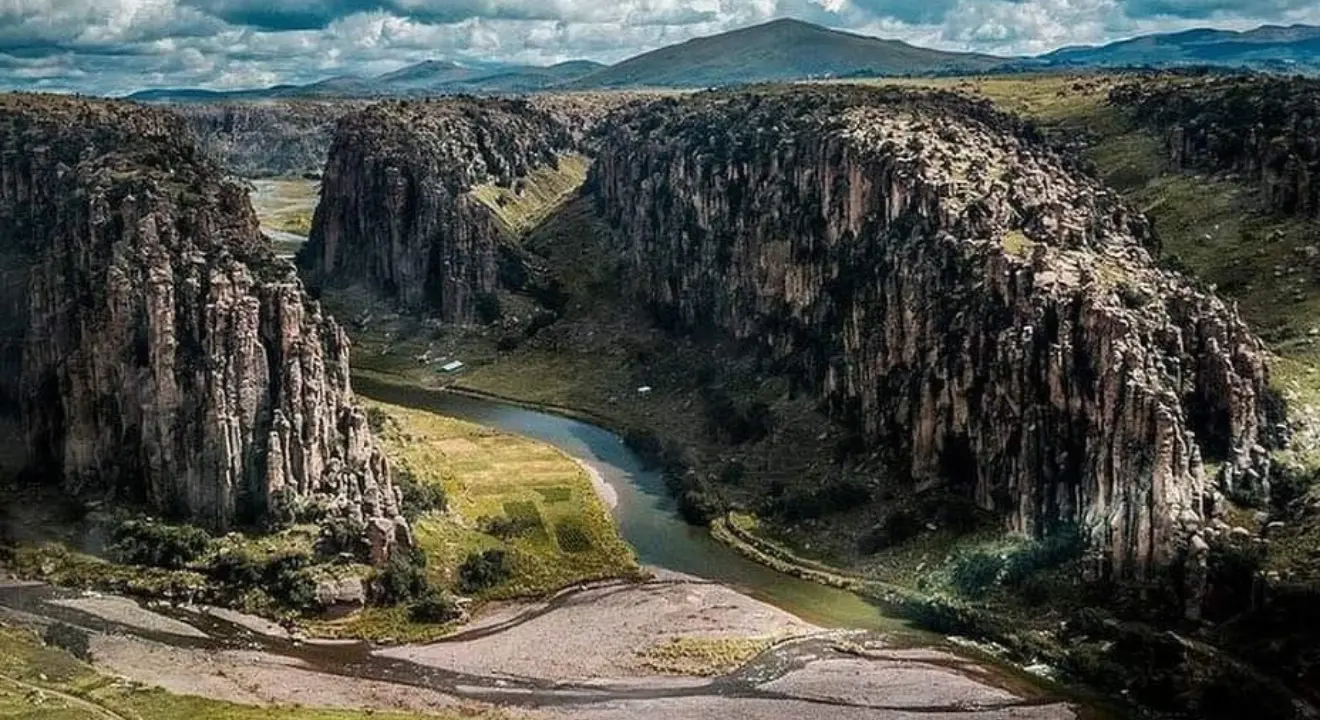
The region is home to llamas and vicuñas, which often graze on the slopes, as well as more elusive species such as vizcachas, pumas, and Andean condors. With patience and a bit of luck, visitors can observe these animals in their natural habitat, especially during early morning or at sunset.
4. Typical High-Altitude Flora:
The vegetation is characteristic of the páramos and puna, with species resistant to cold and dry climates. Notably, the Puya Raimondi stands out, an emblematic Andean plant that can exceed 10 meters in height and blooms only once in its lifetime, offering an impressive natural spectacle.
5. Natural Viewpoints:
Throughout the canyons, there are panoramic points that allow full views of the three canyons and the surrounding valley. From here, one can appreciate the scale of the landscape, the contrast of rock colors, and the movement of the rivers. These spots are ideal for hiking, photography, and enjoying the tranquility of the area, far from mass tourism.
Nearby Archaeological Sites:
Just a few minutes from the canyons is:
1. Maukallacta
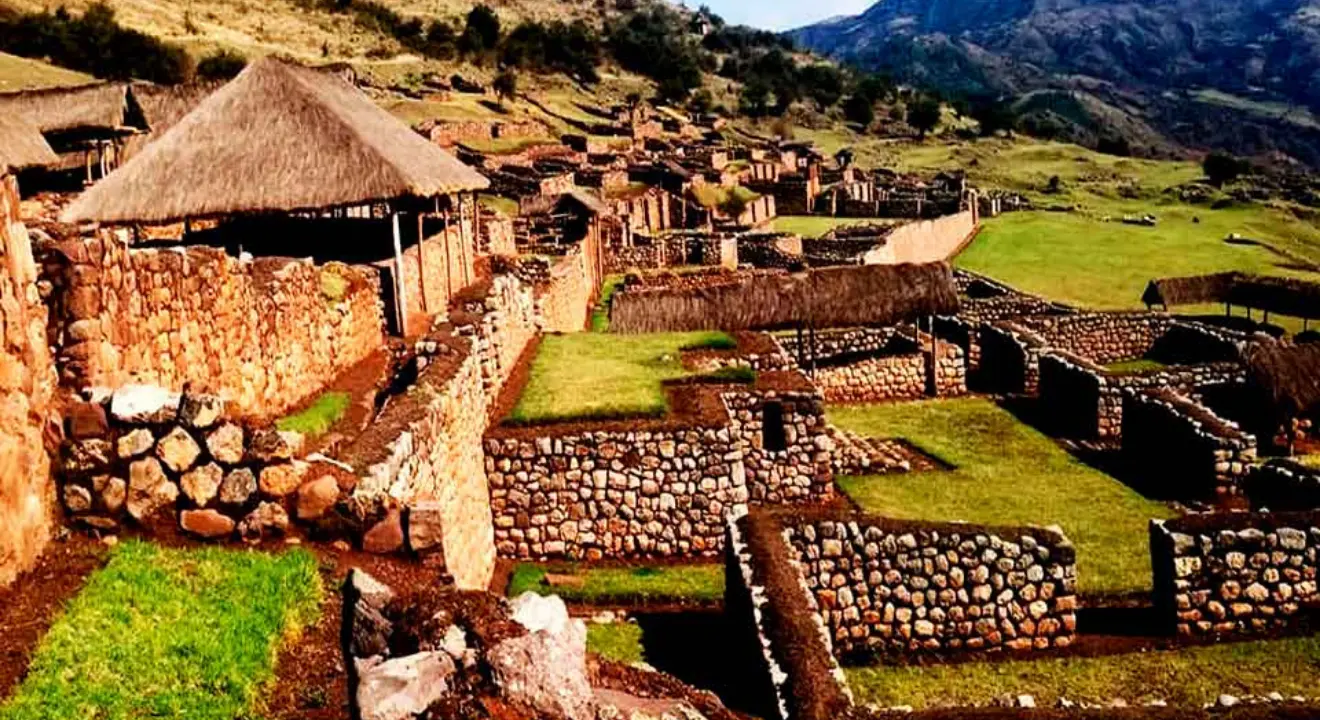
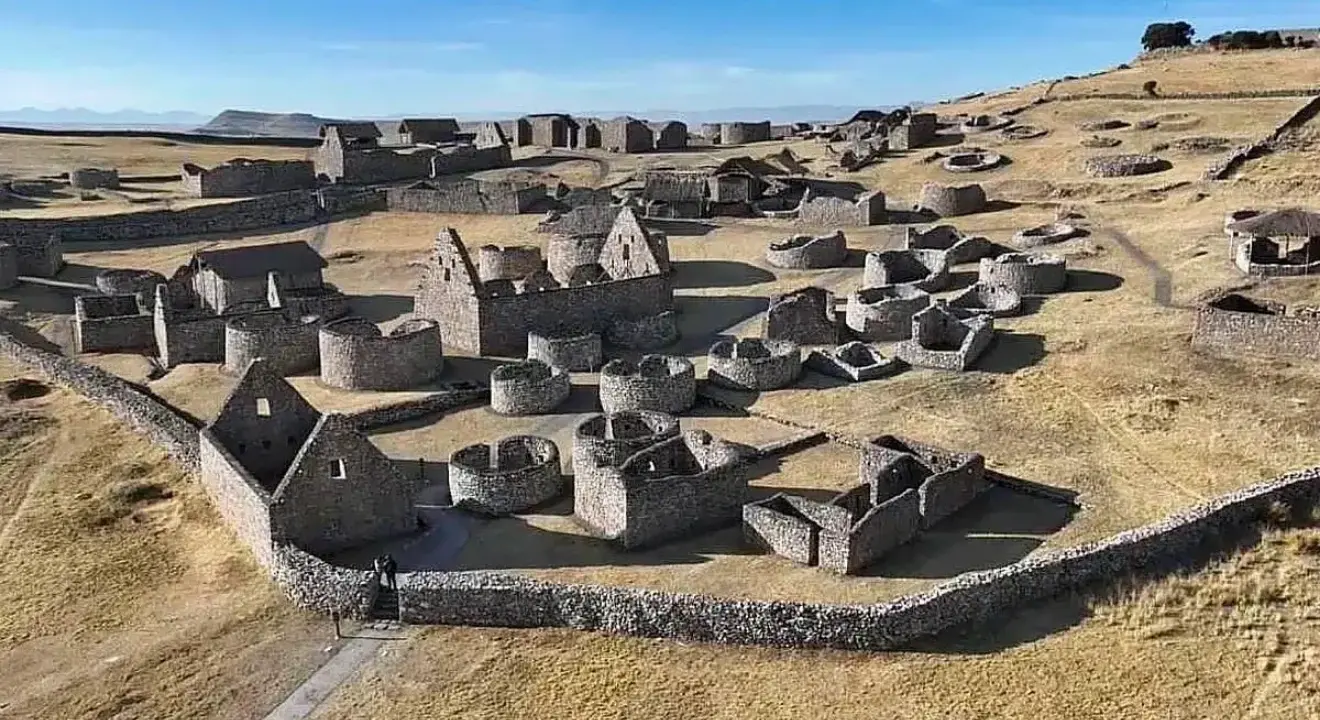
Located in the heights of Espinar, Maukallacta was an important pre-Inca and Inca center. Here, one can observe chullpas, circular enclosures, and plazas that show how ancient Andean communities lived and organized themselves. Visiting Maukallacta is like glimpsing into a past full of history and connection with the land, where the architecture and layout of spaces reflect the ceremonial and social life of its inhabitants. Its strategic location also offers panoramic views of the valley and surrounding Andes.
2. Gentil Wasi
Located in the community of Chaupimayo, it is a cave carved into a rocky cliff, shaped by human hands. It has two entrances, measures 18 meters deep and 5 meters high, and its interior reveals gallery-like structures that may have served as ceremonial spaces or shelters. It is a quiet place that invites visitors to connect with history in silence, ideal for those seeking an introspective experience close to ancestral tradition.
3. Kanamarca
This archaeological site is located 15 km from Yauri, in Espinar, Cusco, at over 4,000 meters above sea level. It was an important center of the K’ana culture and still preserves very well-maintained stone constructions. One of its most remarkable findings was the tomb of the priestess, the Lady of Kanamarca, which provided key information about the social and ceremonial organization of this culture. Additionally, its elevated location allows for spectacular views of the valley and surrounding Andes, combining history with natural scenery.
4. María Fortaleza (Taqrachullo)
Just a few minutes from the Tres Cañones de Suykutambo is María Fortaleza, also known as Taqrachullo, a pre-Hispanic archaeological site located on a strategic rocky formation.
This place was occupied by the Wari, Qolla, and later the Incas, who took advantage of the elevated location for defensive, ceremonial, and territorial control purposes. One of its most notable features is the ceremonial spaces shaped like a “D,” characteristic of Wari architecture, as well as Inca constructions showing polished stone techniques and spatial organization.
It is believed that María Fortaleza had a direct relationship with the Tres Cañones, serving as a natural lookout and connecting point between the paths used by the region’s ancient inhabitants.
In addition to its historical importance, the site offers stunning panoramic views of the canyons and the valley, making it an ideal place for photography, cultural exploration, and contact with nature.
Visiting María Fortaleza allows one to immerse in Andean history, contemplate ancestral architecture, and appreciate the strength of a landscape that combines geography and cultural memory in a single place.
Adventure in the Tres Cañones de Suykutambo
The Tres Cañones are not only a spectacular landscape but also a perfect place for adventure activities, ideal for those seeking intense experiences and direct contact with Andean nature.
1. Rafting, Kayak, and Canoeing
The rivers that run through the canyons, especially the Apurímac, offer ideal stretches for water sports. Depending on your skill level, you can find calm sections as well as exciting rapids during the rainy season, making it an exhilarating option for water enthusiasts.
2. Horseback Riding
Exploring the canyon on horseback is a calm and traditional way to traverse natural paths, reach spectacular viewpoints, and experience the vastness of the Andean landscape from a different perspective.
3. Rock Climbing
The canyon’s imposing volcanic walls are suitable for climbing, with routes adaptable for both beginners and more experienced climbers, always with proper guidance and safety equipment.
4. Rappelling
Rappelling down the rock walls provides a unique adrenaline rush, combining technique and adventure while descending the natural formations in a spectacular environment.
5. Mountain Biking and Motocross
The canyon surroundings have dirt roads and challenging trails, perfect for mountain biking or motocross, with routes that traverse diverse landscapes and offer freedom to explore remote areas.
6. Other Sports and Activities
In addition to the above, the area is also suitable for trekking, paragliding, and downhill biking.
What to Bring
- Personal documents: ID or passport and some cash.
- Warm layered clothing: Windbreaker, sweater or fleece, hat, and gloves. Weather changes quickly between day and night.
- Comfortable and sturdy footwear: Trekking boots or mountain shoes with good soles.
- Sun protection: Hat, sunglasses, and sunscreen. UV exposure is strong at high altitude.
- Small backpack: To carry water, snacks, camera, extra clothes, and personal items.
- Water and snacks: Constant hydration and energy foods.
- Camera or cellphone with extra battery: For landscape and archaeological photos.
- Trekking poles (optional): Useful for walking on uneven or steep trails.
- Adventure gear (if applicable): Helmet, harness, rope, life jacket, depending on the activity (rafting, climbing, rappelling).
What Not to Bring
- Heavy or bulky items: Avoid large backpacks, suitcases, or unnecessary luggage; they hinder movement.
- Inappropriate shoes: Sandals, flat shoes, or heels are not recommended.
- Perishable food without protection: Fruits or foods that spoil quickly.
- Unnecessary valuables: Expensive jewelry or delicate electronics; risk of loss or damage.
- Plastics or trash: Do not leave waste; the area is a protected natural zone.
- Pets: Not recommended for safety and conservation reasons.
Curious Fact
Although the Tres Cañones appear as gigantic isolated cliffs, each was formed by a different river: the Apurímac, Callumani, and Cerritambo, which over millions of years eroded the rock, creating three natural corridors that converge into a single valley. This geological phenomenon not only shaped the landscape but also influenced the location of ancient settlements and fortresses, such as María Fortaleza (Taqrachullo), which were strategically built to oversee the canyons.
We are accredited by