
SUYUPARINA GLACIER: ADVENTURE AMONG ICE AND MOUNTAINS
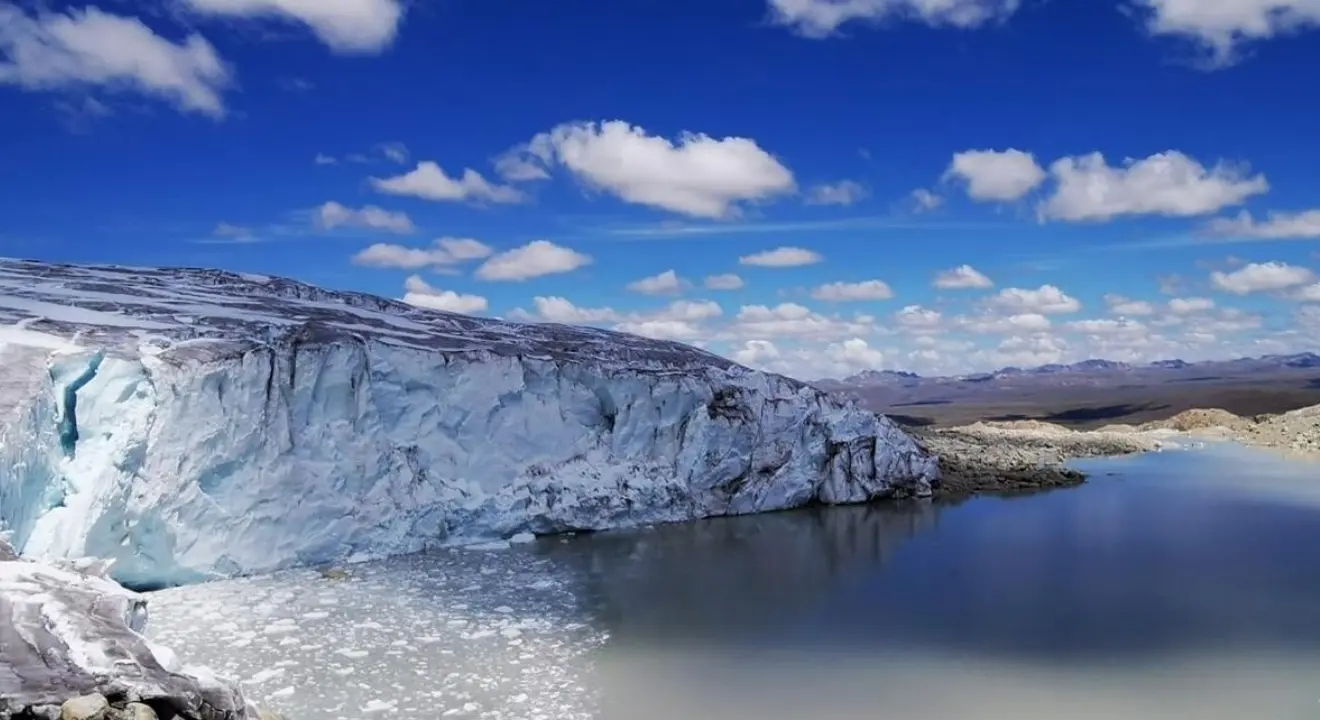
The Suyuparina Glacier is a natural wonder that dazzles with its energetic aura and overwhelming beauty. Visiting it involves disconnecting from the noise of the world and even reconnecting with yourself. At every step, you will notice how nature surrounds you with its silence, the whisper of the wind, and an air so pure that you will want to take it with you. Pachamama here, in her fullest expression, will offer you an exceptional and unforgettable experience.
History
The Suyuparina Glacier has existed for thousands of years as part of the Vilcanota Range, forming a unique ecosystem in the Peruvian Andes. Its name, of Aymara origin, means “pile of stones,” referring to the rocky formations that surround it.
This glacier is part of the Quelccaya sector, one of the largest tropical glaciers in the world, and has been essential for local communities who depend on its waters for agriculture and daily life. For centuries, the inhabitants of the area have considered it a sacred place, associated with Pachamama, Mother Earth, venerating its power and energy as a source of life and protection.
Over the years, Suyuparina has attracted the attention of explorers, scientists, and travelers seeking to study climate change, admire its majesty, and experience the connection with nature that a high-altitude glacier offers.
Location
The Suyuparina Glacier is located in the community of Phinaya, within the Cusco region, in the splendid Vilcanota Range. Its name originates from the Aymara language, meaning “pile of stones.”
It is part of the Quelccaya sector, one of the largest tropical glaciers in the area. The altitude of Suyuparina is approximately 5,450 meters above sea level, and it is notable for its size and beauty; as you approach, the mountain gradually loses its earthy tones and reveals a crystalline white, as the light accumulation is unique. Standing in front of Suyuparina Glacier is to witness a phenomenon that no photograph can fully capture—a spectacle only experienced with your own eyes.
How Suyuparina Was Formed: Cusco’s Frozen Jewel
The Suyuparina Glacier formed thousands of years ago from the accumulation of snow and ice in the high Vilcanota Range. Over centuries, low temperatures allowed snow to fall year after year without fully melting, compacting slowly into glacial ice.
Over time, the glacier began to move slowly down the mountain due to gravity, deeply shaping valleys, crevices, and rocks along its path. Its morphology above 5,100 meters above sea level and the cold climate in the area have kept the glacier perennial, creating an ice giant that still changes and evolves slowly today, observing the passage of time, ice, and natural phenomena in the Andes.
How to Reach Suyuparina Glacier
The most common route to Suyuparina Glacier starts from Cusco. The adventure typically begins very early, around 1 a.m., to make the most of the day. From Cusco, travelers take a tourist or private vehicle to Pitumarca, a journey of approximately 3 hours on paved roads. From there, the route continues to the community of Phinaya via a dirt road for about 1 hour, reaching the foot of the glacier.
From the trailhead, a short 20-minute hike (1.5–2 km) leads to the glacier, passing through valleys with vicuñas, llamas, and breathtaking landscapes, including views of Ccascara Lagoon. The route has medium-low difficulty but is at high altitude (5,100 meters above sea level), so warm clothing, trekking poles, comfortable boots, and enough water are recommended.
For those traveling in their own vehicle, it is advisable to bring a shovel and pickaxe in case of difficult trails, and having a local guide who knows the route ensures safety.
The complete round trip from Cusco can take between 12 and 14 hours, making this excursion a full adventure, surrounded by the majesty of the Andes and the unique beauty of the glacier.
Attractions at Suyuparina Glacier
1. Eternal Ice
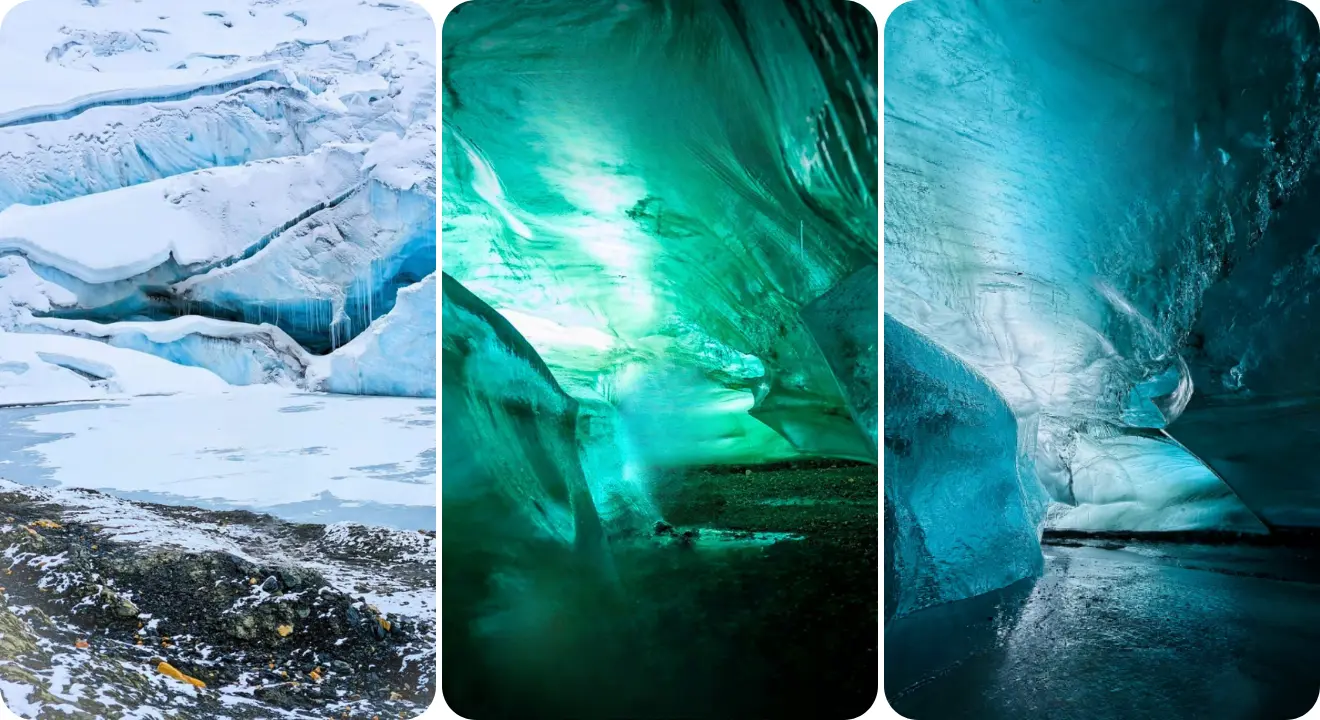
The surface of the glacier reflects a palette of colors from pure white to deep blue, depending on sunlight and ice density. These shades form because the most compact ice absorbs warm colors and reflects blues, creating a visual spectacle that changes minute by minute. Sunlight can make certain crevices and ice blocks sparkle like crystals, giving the glacier an otherworldly appearance.
2. Ice Caves and Crevices
The glacier is not uniform: it is full of deep crevices and ice caves formed by the constant movement of ice and seasonal melting. Each year, these formations change, so no two visits are the same. The caves are natural passages that allow you to observe the ice from the inside, with translucent structures and textures that resemble crystal sculptures. Some crevices are deep enough to see the ice in layers, revealing its history of thousands of years.
3. Surreal Landscape
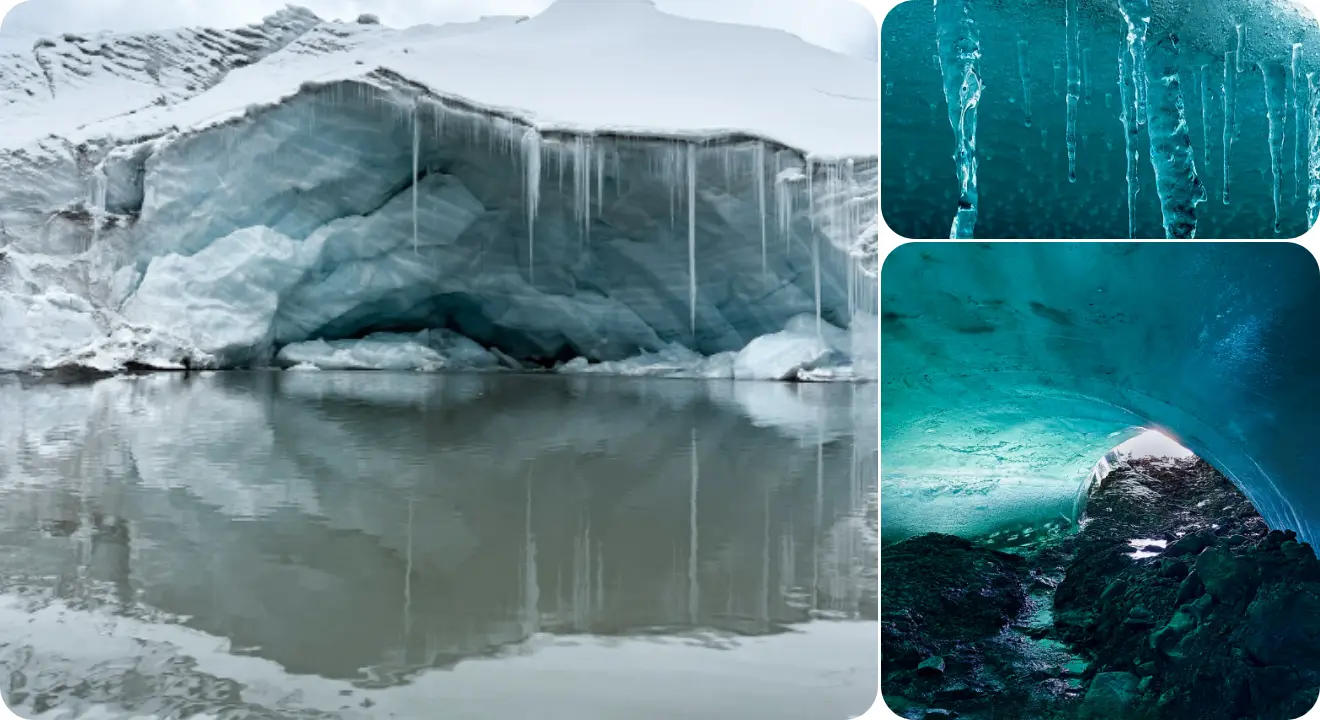
The glacier is surrounded by snow-capped mountains and high-altitude lagoons that reflect the sky and surrounding peaks. The combination of ice, rock, and water creates an almost magical environment, with contrasts of color and light that seem taken from a dream. The reflections of ice and water create perfect settings for photography and contemplation, making each glance at the glacier reveal a new detail.
4. Altitude and Sense of Immensity
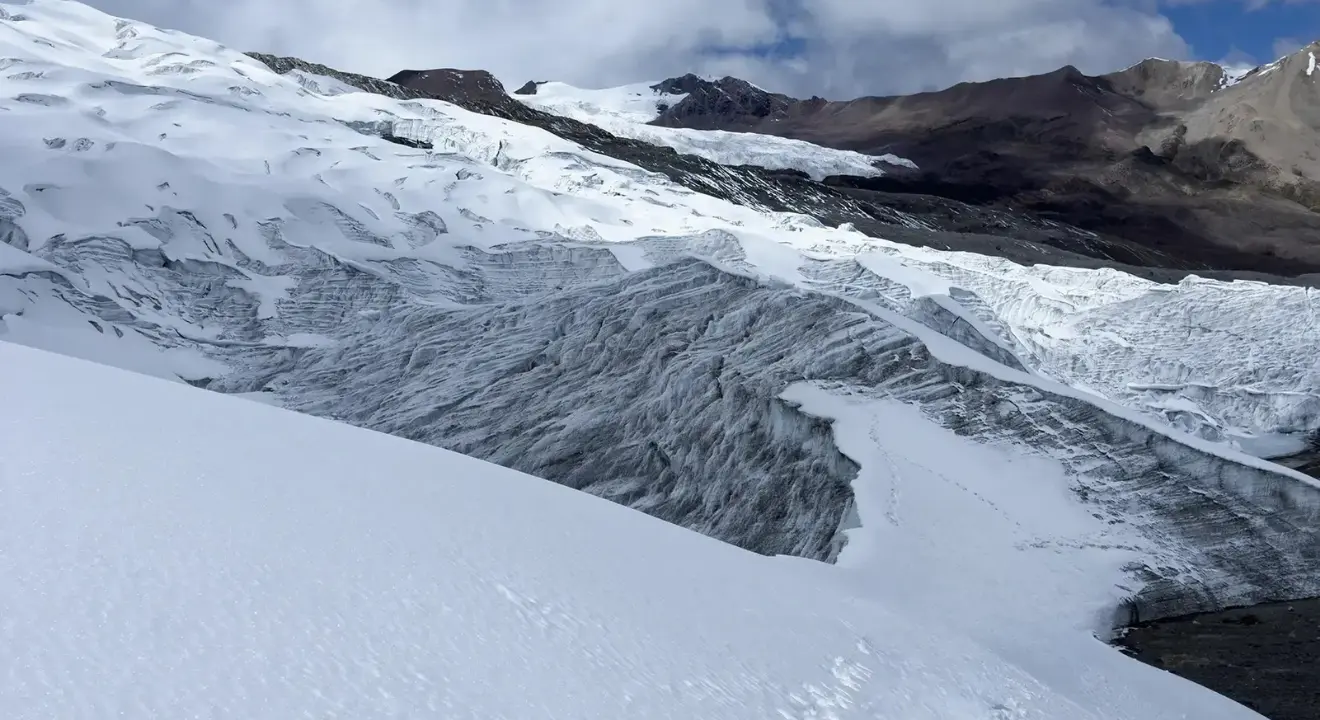
At over 5,100 meters above sea level, the hike and the view from the glacier offer a sense of vastness and grandeur difficult to find elsewhere. The altitude makes each step a physical achievement and intensifies the connection with the natural surroundings. From there, you can see how the glacier stretches between mountains and valleys, reminding visitors of the monumental scale of the Andes.
5. Silence and Pure Nature
The Suyuparina Glacier is far from crowds, so silence dominates the landscape. Only the wind, the crunch of ice, and the songs of Andean birds can be heard, creating a unique sensory experience. This silence allows a deep connection with nature and a sense of calm that few places in the world can offer.
Climate of the Suyuparina Glacier
The climate at Suyuparina is cold and high-mountain, typical of tropical glaciers in the Peruvian Andes, due to its altitude of approximately 5,100 meters above sea level.
1. Temperatures:
During the dry season (May to October), temperatures usually range between -5 °C and 10 °C during the day, dropping significantly at night.
During the rainy season (November to April), it can be more humid and temperatures range from 0 °C to 8 °C, with a lower perceived temperature due to humidity and wind.
2. Precipitation:
The dry season is ideal for visiting: clear skies, sunny days, and lower risk of rain, making trekking and photography easier.
The rainy season brings frequent showers and wet trails, which can make paths slippery.
3. Wind:
Cold and strong winds are common near the glacier, intensifying the feeling of cold and making windproof and warm clothing advisable.
4. Solar radiation:
Due to the altitude, solar radiation is intense. It is recommended to use sunscreen, sunglasses, and a hat, even on cloudy days.
5. Ice condition:
During the dry season, the glacier is firmer and more stable, while in the rainy season, some areas may be softer or wetter, increasing hiking difficulty.
What to Bring to the Suyuparina Glacier
- Passport or copy of passport (some checkpoints require it)
- Light backpack (only essentials)
- Warm layered clothing (fleece, thermal jacket, or windbreaker)
- Waterproof jacket or rain poncho
- Trekking boots or shoes with good soles
- Hat, gloves, and scarf (it is very cold)
- Sunscreen and sunglasses (strong radiation at high altitude)
- Water and energy snacks
- Trekking poles (optional, but very helpful)
- Camera or phone with charged battery
- Personal medication (if needed)
- Cash (no ATMs in the area)
What Not to Bring to the Suyuparina Glacier
- Smooth or urban sneakers
- Light or cotton clothing (does not keep warm at altitude)
- Alcoholic beverages (affects acclimatization)
- Trash or single-use plastics
- Drones without permission (some areas require a permit)
Traveler Tip
Be well acclimated and bring warm and waterproof clothing, even in the dry season. The weather changes quickly, and you will be at over 5,100 meters above sea level. Walk slowly, stay hydrated, and respect the glacier: do not step on the ice or leave waste, as it is a sacred and fragile place.
Fun Facts
- Its name comes from Aymara and means “pile of stones.”
- It is part of the Quelccaya glacier system, the largest tropical glacier in the world.
- It is over 5,100 meters above sea level, surrounded by high mountain landscapes.
- The ice changes color from white to blue depending on the daylight.
- It is a sacred place for local communities and still little visited.
- Its retreat allows close observation of the effects of climate change.
We are accredited by