MARAS AND MORAY: THE JEWELS OF THE SACRED VALLEY
Maras and Moray invite you to discover one of the most surprising facets of the Sacred Valley. Surrounded by Andean landscapes and communities that preserve ancestral traditions, these destinations reveal the deep relationship the Incas had with the land and knowledge. Each visit becomes a journey through settings that blend history, nature, and symbolism.
Visiting Maras and Moray goes beyond observing ancient constructions: it is an opportunity to understand how Inca wisdom managed to transform the environment into spaces for experimentation, production, and ritual. In this blog, we will guide you through these sites and their surroundings so that you can enjoy an enriching experience during your trip.
MARAS MORAY
What is the Sacred Valley of the Incas?
The Sacred Valley of the Incas is one of the most important and fascinating regions of Peru, located among majestic Andean mountains and crossed by the Vilcanota River (Urubamba). It extends at an approximate altitude ranging from 2,000 to 3,000 meters above sea level (6,560 to 9,840 feet), which gives it a milder and more pleasant climate compared to Cusco.
During the Inca Empire, this valley was a key territory thanks to its fertile lands, favorable climate, and strategic position, becoming an important agricultural, spiritual, and administrative center. Here, advanced farming techniques such as agricultural terraces were developed, and important archaeological complexes were built.
Today, the Sacred Valley is home to emblematic destinations such as Pisac, Ollantaytambo, Chinchero, Maras, and Moray, forming a cultural corridor that leads to Machu Picchu. For travelers, it is an ideal place to acclimatize, enjoy spectacular landscapes, and understand the greatness of the Inca civilization while experiencing an authentic journey in the Peruvian Andes.
Where are Maras and Moray located?
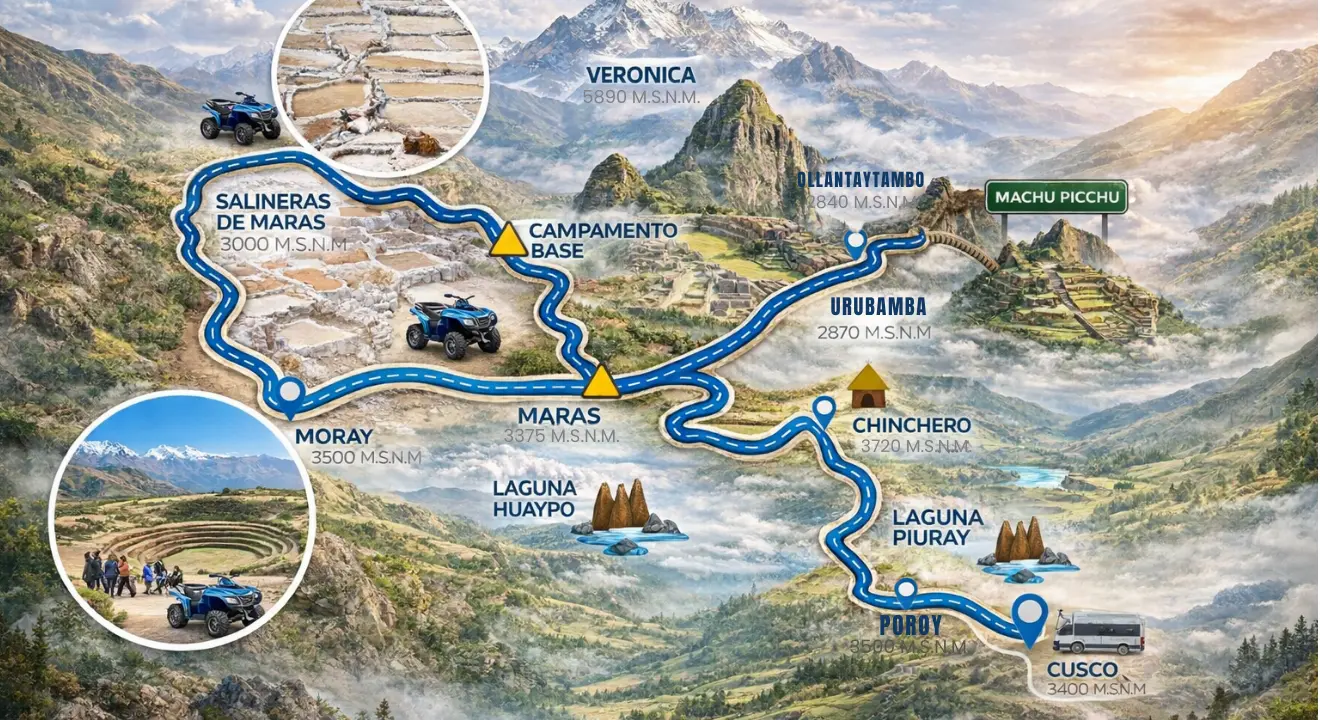
Maras and Moray are located in the Sacred Valley of the Incas, in the Cusco region of Peru, within the province of Urubamba. They are situated northwest of the city of Cusco, in a high Andean area surrounded by mountains, agricultural fields, and traditional communities. The town of Maras is settled on an Andean plateau, while Moray is located a few kilometers away, in a natural depression where the Incas built their famous circular terraces. Both sites are close to Chinchero and Urubamba, which makes it easy to visit them on the same route. From Cusco, the distance is approximately 50 km.
How to get to Maras and Moray from Cusco
From Cusco, head first toward Chinchero or Urubamba (buses depart from Av. Grau and Pavitos). The trip takes between 1 and 1.5 hours. Once there, take a local taxi that will take you directly to Moray and then to the Maras Salt Mines; the taxi ride takes about 30–40 minutes and is the most practical option for visitors. The total travel time from Cusco is approximately 2 hours. Moray is located at 3,500 m a.s.l. (11,500 feet), so it is recommended to acclimatize for at least one day in Cusco before visiting. Bring cash for entrance fees, water, sunscreen, and warm clothing, as the weather changes quickly.
Best time and climate in Maras and Moray
The climate in Maras and Moray is mild and dry during the day, but cold in the mornings and at night, due to their altitude of approximately 3,500 m above sea level (11,500 feet). The dry season runs from May to October, with sunny days and temperatures between 10 °C and 20 °C, making it ideal for visiting. The rainy season runs from November to April, with greener landscapes but frequent rain, especially in the afternoons. It is recommended to bring light warm clothing, sunscreen, a hat, and water, as the weather can change quickly.
MORAY: THE AGRICULTURAL LABORATORY OF THE INCAS
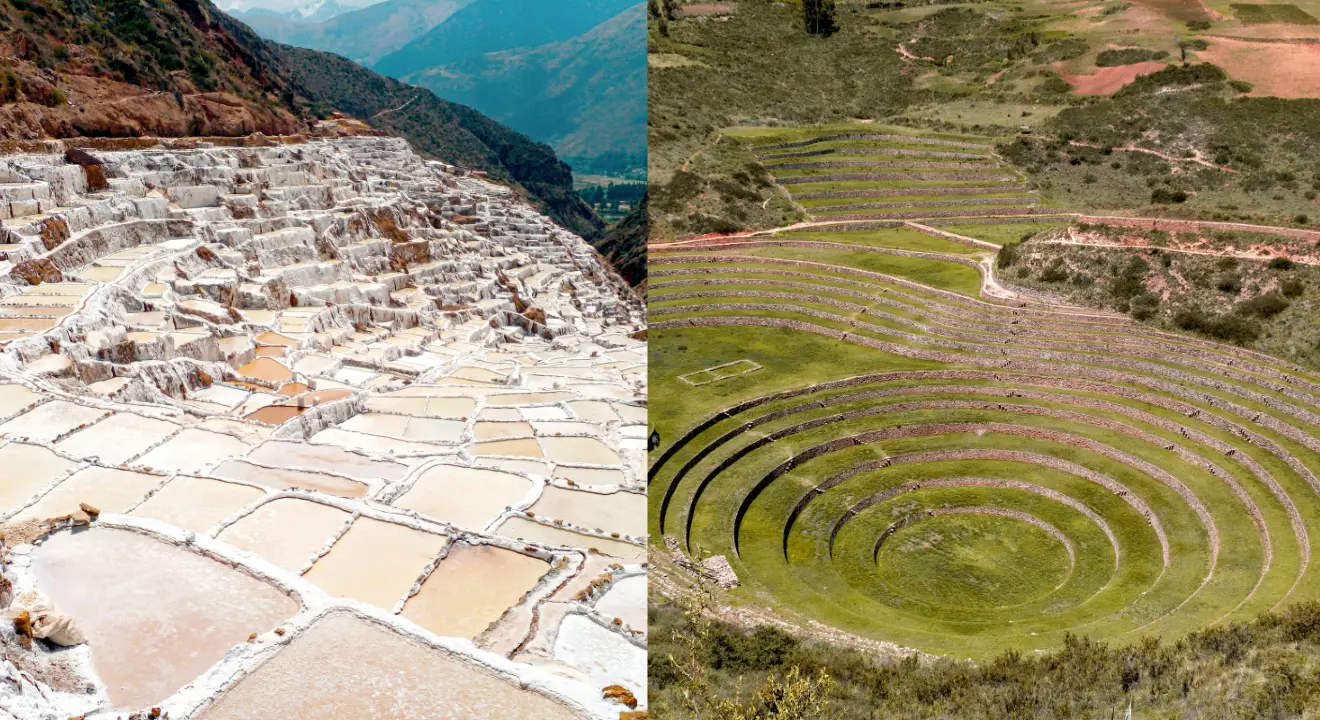
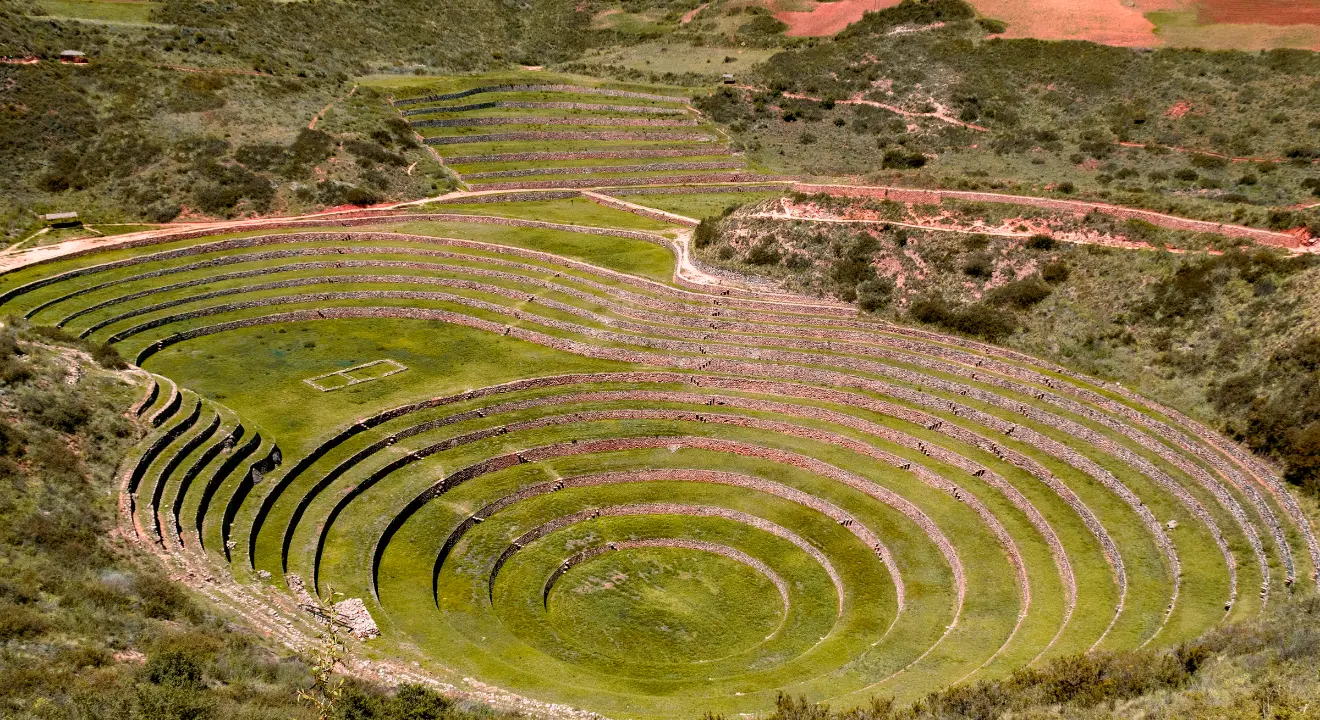
Moray emerges as one of the most enigmatic archaeological complexes of the Inca legacy. Its design captivates from the very first moment: a series of perfectly shaped circular terraces that descend like a coliseum toward the center, creating an image as striking as it is unique. At first glance, it might seem like an artistic work carved into the earth; however, its true value lies in the extraordinary wisdom it contains.
Moray was conceived as a space for observation and experimentation, where the Incas took advantage of the natural variations of the terrain to study the behavior of crops. Each level presents different conditions, demonstrating the deep understanding this civilization had of agriculture, climate, and the relationship between human beings and nature. Visiting Moray is discovering a place where ancestral engineering, the Andean landscape, and scientific knowledge merge in perfect harmony.
History and origin
Moray was built during the period of greatest expansion of the Inca Empire, approximately between the 15th and 16th centuries, as a special center dedicated to agriculture. Unlike other archaeological sites, Moray was not a city or a fortress, but an experimental space where the Incas studied the land, the climate, and crops. Its circular terraces made it possible to recreate different environmental conditions, taking advantage of the depth of the terrain and the orientation toward the sun.
Thanks to this knowledge, the Incas managed to adapt seeds to different altitudes and improve agricultural production throughout the Sacred Valley. Moray reflects the high scientific level of the Andean world and its respect for nature, showing that agriculture was a sacred science, linked to the balance between Pachamama, the sun, and time.
Symbolism and spiritual connection of Moray
In addition to its agricultural function, Moray had a strong symbolic and spiritual meaning for the Incas. The circular shape of its terraces represents the cycle of life, the movement of the sun, and the harmony of the universe, fundamental concepts in the Andean worldview. For the Incas, agriculture was not only a practical activity, but a sacred act deeply connected with Pachamama (Mother Earth).
Each level symbolized a direct relationship between human beings, the earth, and the stars. It is believed that Moray was also a ceremonial space, where rituals were performed to ask for good harvests and natural balance. The orientation of the site and its design made it possible to observe the behavior of the sun, shadows, and seasonal changes, reinforcing its connection with agricultural and cosmic cycles.
Wata Qallariy: the symbolic rebirth of the Andean year in Moray
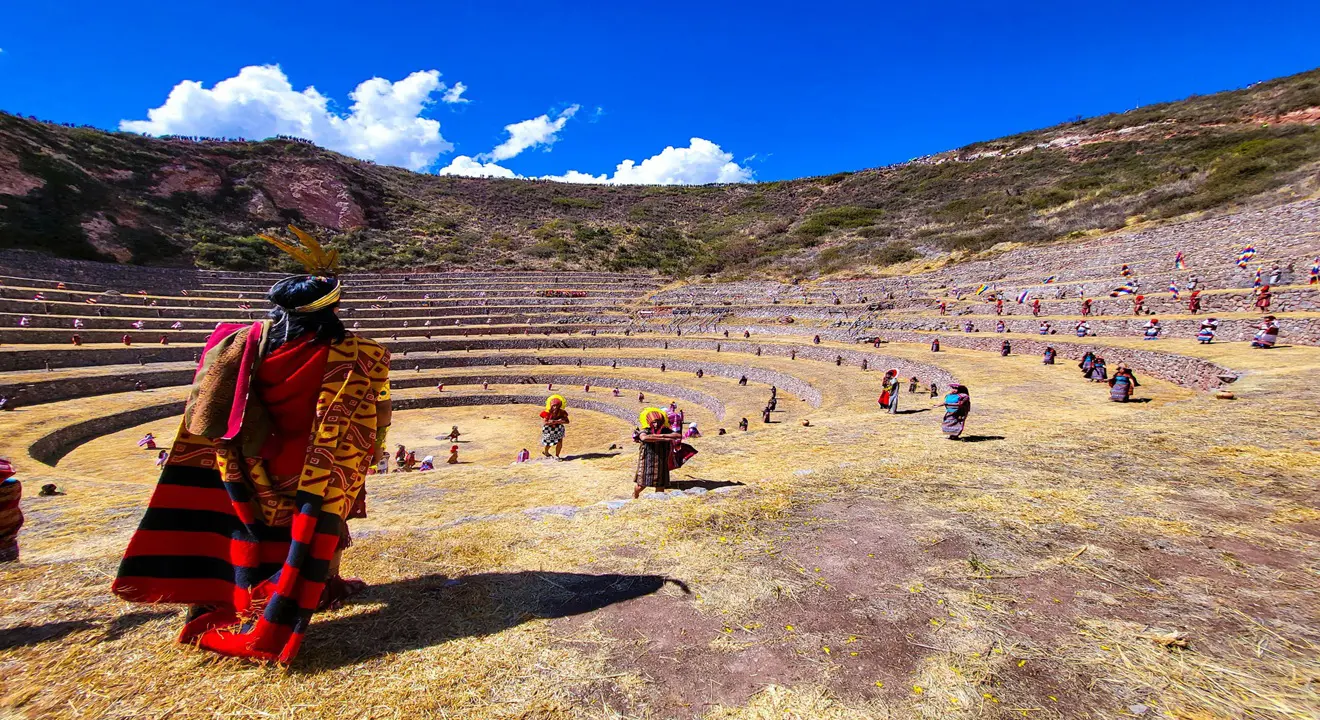
Today, Moray is the setting for cultural ceremonies that represent Wata Qallariy, the symbolic beginning of the Andean year. These activities, inspired by the Inca worldview, seek to reconnect with the earth, the sun, and the agricultural cycles that were fundamental for ancient Andean civilizations. Although Moray was not historically documented as the official site of this celebration in Inca times, its deep agricultural symbolism makes it an ideal place to represent the rebirth of the year and harmony with Pachamama.
Why Moray is a must-see stop in the Sacred Valley
Visiting Moray means discovering how ancestral knowledge and nature can coexist in perfect harmony. This place invites you to look beyond the stones and understand the advanced vision that the Incas had about the land, time, and life. It is not just a site to visit, but a space to observe, learn, and feel.
Including Moray in your trip to Cusco is giving yourself a special pause within the Sacred Valley. Seeing its terraces from above, while the landscape changes with the light of the day, turns the visit into a unique memory that stays with the traveler long after leaving.
MARAS: LIVING TRADITION BETWEEN SALT AND MOUNTAIN
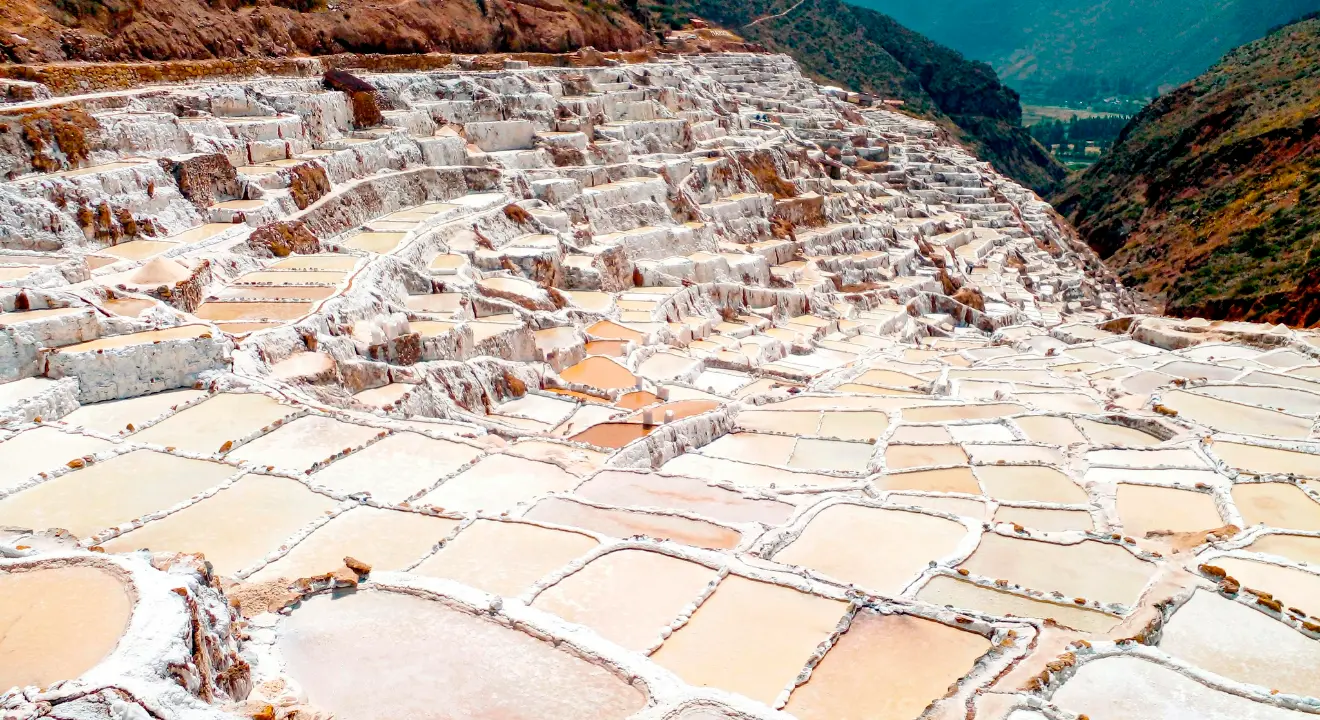
A short distance from Cusco, within the Sacred Valley of the Incas, Maras stands out for a landscape that seems taken from another time. Its main attraction is the Salt Mines (Salineras), an impressive system with more than 4,500 salt pools that cover the mountainside and reflect sunlight in white and pink tones. This unique scenery in the Andes has been used continuously since pre-Inca times and remains in operation to this day.
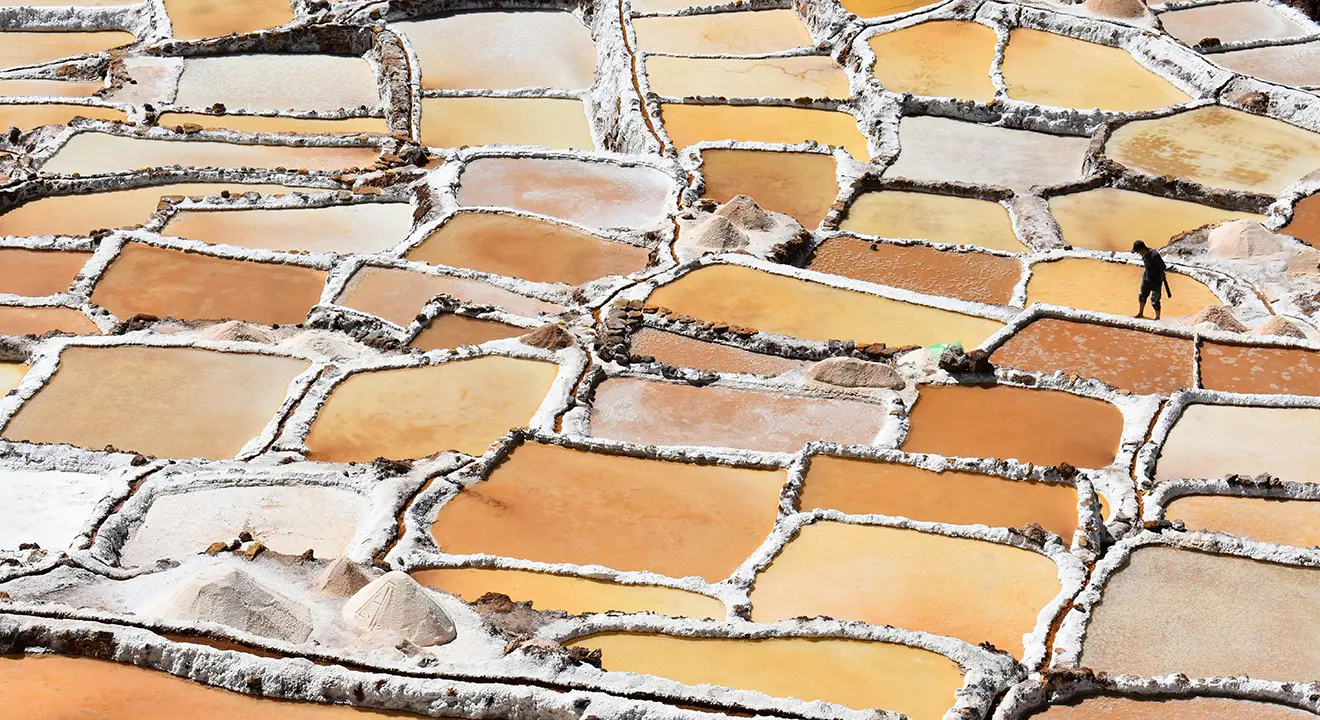
The pools are arranged in a stepped manner on natural slopes and are fed by a salty water spring that emerges from inside the mountain. Through carefully designed channels, the water is distributed to each pond, where it remains for several days until it evaporates due to the action of the sun and wind. The result is the formation of salt crystals that are manually collected by local families, maintaining a community work system passed down from generation to generation.
Beyond their economic importance, the Salt Mines of Maras represent a living tradition and an example of Andean ingenuity in using natural resources without altering the balance of the environment. Walking along their paths allows visitors to understand the history, observe the extraction process, and enjoy one of the most photogenic landscapes of the Sacred Valley.
History and Origin of Maras
The history of Maras begins long before the rise of the Inca Empire. Various studies indicate that pre-Inca cultures, such as the Wari civilization (approx. 500–1100 AD), were the first to recognize the value of the salty water spring that emerges from the mountain. From this natural resource, the first systems of salt ponds began to develop for salt extraction.
During the Inca period, this system was reorganized and improved, incorporating a complex network of channels and terraces that allowed a more efficient distribution of the salty water. Thanks to this refinement, salt production became a key activity for the region. Surprisingly, many of these ancestral techniques are still in use today, showing the deep hydraulic knowledge and respect for nature that characterized ancient Andean cultures.
A heritage that endures over time
Today, the Salt Mines of Maras continue to operate under a protection system that limits direct access to the ponds, ensuring their conservation. From the designated viewpoints, visitors can observe how the salty water naturally evaporates, giving rise to the well-known Maras salt, famous for its pink tones and mineral richness.
The management of this ancestral site is in the hands of more than 600 families from the community, who keep the tradition alive through completely artisanal work. Each family is responsible for a group of ponds and is part of a community model that combines cooperation, respect for nature, and the transmission of ancestral knowledge.
Visiting Maras goes beyond admiring its natural beauty. It is about approaching a culture that has preserved its identity over the centuries, where the sun, the mountain, and human effort come together to sustain one of the most authentic traditions of the Sacred Valley.
Benefits of Maras Salt
Maras salt is a natural product valued for its ancestral origin and artisanal process. Unlike refined salts, this salt is obtained through natural evaporation, which allows it to retain part of its natural minerals.
Among its main benefits are:
- Rich in natural minerals: it contains small amounts of calcium, magnesium, potassium, and other trace elements that contribute to the body’s mineral balance.
- Less processing: since it is not highly refined, it maintains characteristics closer to its natural state.
- Mild and balanced flavor: it allows using a smaller amount to season food, which helps reduce excessive salt consumption.
- Versatile culinary use: it is highly valued in Peruvian and international cuisine for enhancing flavors without overpowering them.
Important traveler tip: Although Maras salt has natural properties, it should be consumed in moderation, like any type of salt, as part of a balanced diet.
Entrance requirements to Maras and Moray
If you plan to explore the Sacred Valley of the Incas, it is essential to know the tickets and fees to access these iconic sites:
| Lugar | Tipo de entrada | Precio | Observaciones |
|---|---|---|---|
| Moray | Boleto Turístico del Cusco (BTC) – Parcial o General | S/ 70 – S/ 130 (extranjeros) | No se puede comprar entrada individual; solo se accede con el BTC. |
| Salineras de Maras | Entrada directa | S/ 15 (peruanos) / S/ 20 (extranjeros) | Pago en efectivo en el acceso; no está incluido en el BTC. |
Traveler tip: Arrive early to enjoy the terraces and salt pools without crowds, and bring cash in soles to make payment easier in Maras.
What to bring to Maras and Moray
- Comfortable and light clothing, but in layers, since the weather can vary depending on altitude and time of day.
- Trekking shoes or sports shoes with good soles for walking on uneven terrain.
- Sunscreen, hat, and sunglasses, as solar radiation is strong in the Sacred Valley.
- Water and light snacks, especially if you are taking a full-day tour.
- Camera or smartphone for photos of the landscapes and terraces.
- Light jacket or windbreaker, as it can get cooler as you go higher.
- Insect repellent, especially during the rainy season.
- Personal documents and cash (only small bills and coins for entrance fees and souvenirs).
What not to bring to Maras and Moray
- Very large or heavy backpacks that make it difficult to walk along narrow paths.
- Large amounts of food that generate trash, since the sites seek to maintain cleanliness and conservation.
- Inappropriate footwear such as sandals or high heels.
- Unnecessary valuables that could be lost or damaged.
- Pets, as they are not allowed in archaeological sites.
Traveler tip: Bringing only what is necessary will make your visit more comfortable and respectful of the cultural and natural heritage of Maras and Moray.
The best places to eat in Maras and Moray
After exploring the archaeological wonders of Moray and the Maras Salt Mines, a gastronomic stop is the perfect complement to your journey. The area offers everything from gourmet options to traditional restaurants with local flavor, ideal for all types of travelers.
1. MIL – Food Lab and Interpretation Center
A unique culinary experience inspired by Andean ingredients. This restaurant, associated with internationally recognized chefs, offers gourmet dishes that combine innovation and tradition. Ideal for those seeking a memorable meal after visiting Moray and the salt mines.
2. La Portada Restaurant
Very popular among tourists and locals, this place stands out for its traditional Peruvian cuisine. Its authentic dishes and cozy atmosphere make it an excellent option for lunch after touring the archaeological attractions.
3. Restaurant Inkasal
A classic Peruvian restaurant offering a varied and balanced menu, perfect for enjoying local flavors in a relaxed atmosphere with good value for money.
4. Ancestral – Maras
Located near the road to the salt mines, this restaurant combines traditional Peruvian food with a contemporary touch, all accompanied by panoramic views that make the experience even more special.
5. Restaurant Misky Unu Maras
Known for its homemade food and authentic flavor, it is an excellent option for a quiet lunch after exploring Maras, ideal for those who want to try local dishes with a familiar touch.
6. Mama Mecha
If you are looking for something affordable but delicious, this restaurant offers homemade Peruvian food and is perfect for travelers on a tight budget.
7. Maraskachis
Small and cozy, this restaurant is ideal for those who want a light meal with authentic regional flavors.
Traveler tip: If you are looking for an unforgettable gourmet experience, book in advance at MIL. For simpler and more traditional meals, any of the restaurants in Maras offers delicious and authentic options.
Dining options near the Sacred Valley
If your route continues toward Urubamba or Ollantaytambo after visiting Maras and Moray, you will find several outstanding dining options for all tastes:
1. Native Peruvian Restaurant
An ideal place to enjoy contemporary Peruvian cuisine with well-prepared dishes and excellent reviews. Perfect for those looking for innovative flavors with local ingredients.
2. Orgánica La Huerta
For travelers who prefer healthy and organic options, this restaurant offers a fresh, nutritious, and colorful menu while maintaining the essence of Peruvian gastronomy.
3. Las Manos and Tikarisun Restaurant Buffet
Two excellent alternatives to taste local Sacred Valley food in buffet format. Here you can try several typical regional dishes, ideal for those who want to sample a bit of everything.
4. Tierra Cocina Artesanal (Urubamba) and Kampu
Author-style Peruvian cuisine options, where dishes combine tradition and innovation with fresh ingredients from the Sacred Valley. Perfect for a more sophisticated gastronomic experience after a day of exploration.
Recommended nearby hotels (Sacred Valley)
These hotels are located in the Sacred Valley, mainly in Urubamba and nearby towns, and are an excellent base for visiting Maras and Moray. Travel times are approximately 40–90 minutes depending on the lodging location.
- Casa Andina Premium Valle Sagrado Hotel & Villas (5 stars) is located in Urubamba and is a luxury hotel that combines comfort, style, and an excellent location to explore the Sacred Valley. It offers spacious rooms, gardens, a swimming pool, and a restaurant with Peruvian and international cuisine. It is ideal for those seeking full comfort and a strategic base to visit Maras and Moray, about 1 hour away.
- Tierra Viva Valle Sagrado Urubamba (4 stars) is a modern hotel with comfortable rooms, free Wi-Fi, breakfast included, and optional tourist services. Its personalized attention makes it perfect for families or travelers who want to explore the Sacred Valley and reach Maras and Moray in about 50–60 minutes.
- Hotel Mabey Urubamba (4 stars) offers excellent value for money, with clean and cozy rooms, a restaurant, and common areas to relax. It is a good option for those seeking comfort without spending too much, with an approximate travel time of 50–60 minutes to Maras and Moray.
- Hotel Pisonay Pueblo (3 stars) is located next to the main highway to Urubamba and offers a quiet atmosphere, simple rooms, and facilities to organize tours. It is ideal for those who want a practical base and to reach Maras and Moray in approximately 45–55 minutes.
- Andean Wings Valley (4 stars) combines modern style with Andean details and features a restaurant, Wi-Fi, and optional transportation. It is ideal for couples or groups looking for comfort and good traveler ratings, with an approximate travel time of 50–60 minutes to Maras and Moray.
- Wifala Harmony Hotel (4 stars, boutique) is a hotel open to the public with a design inspired by Andean culture. It offers a swimming pool, spa, restaurant, and optional transfers. It is excellent for those seeking unique-style accommodation and a comfortable base to visit Maras and Moray in about 50–60 minutes.
- Sacred Dreams Lodge and Spirit of the River Lodge (3–4 stars) are cozy and quiet lodges surrounded by nature, with a rustic but comfortable atmosphere. They are perfect for relaxing after a day of excursions, with an approximate travel time of 40–50 minutes to Maras and Moray.
- Sonesta Hotel Posadas del Inca Yucay (4 stars) is a traditional hotel with Andean décor, gardens, and full services. Ideal for those seeking a classic stay in the Sacred Valley and to enjoy Maras and Moray, located about 45–55 minutes away by car.
We are accredited by