INTI PUNKU DE OLLANTAYTAMBO: SACRED INCA VIEWPOINT
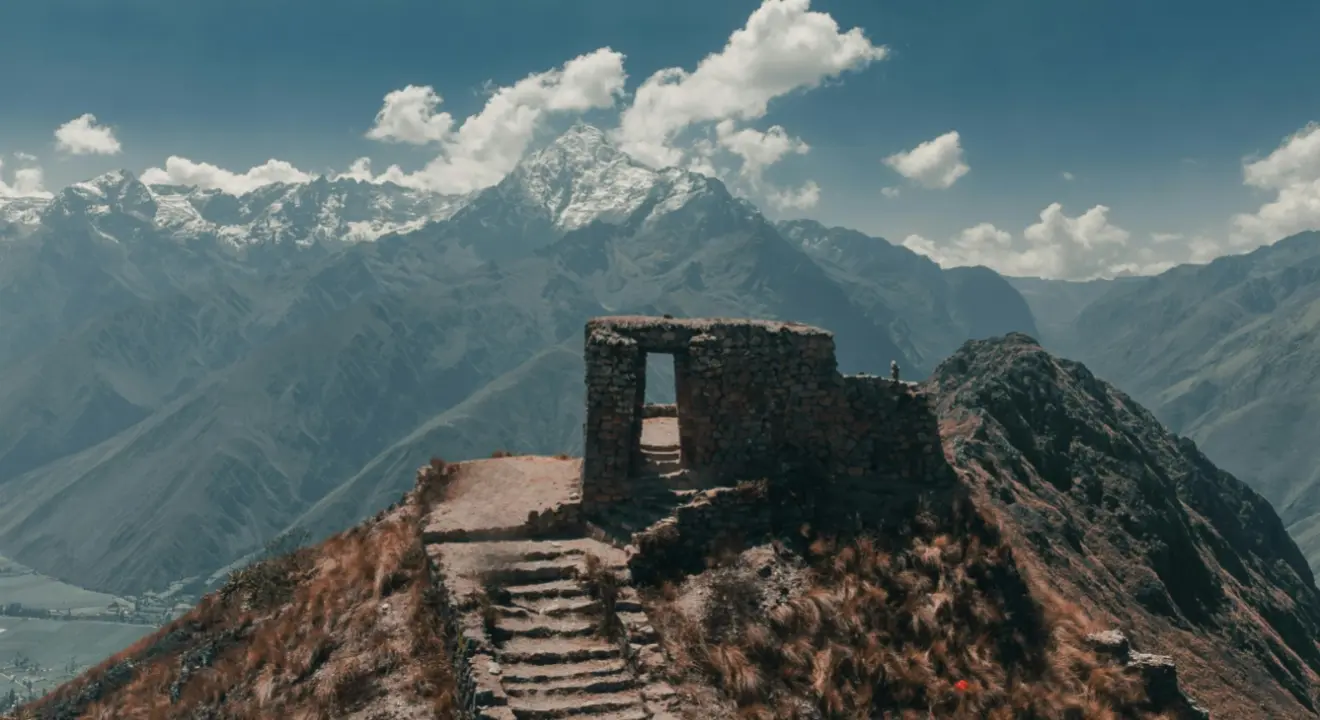
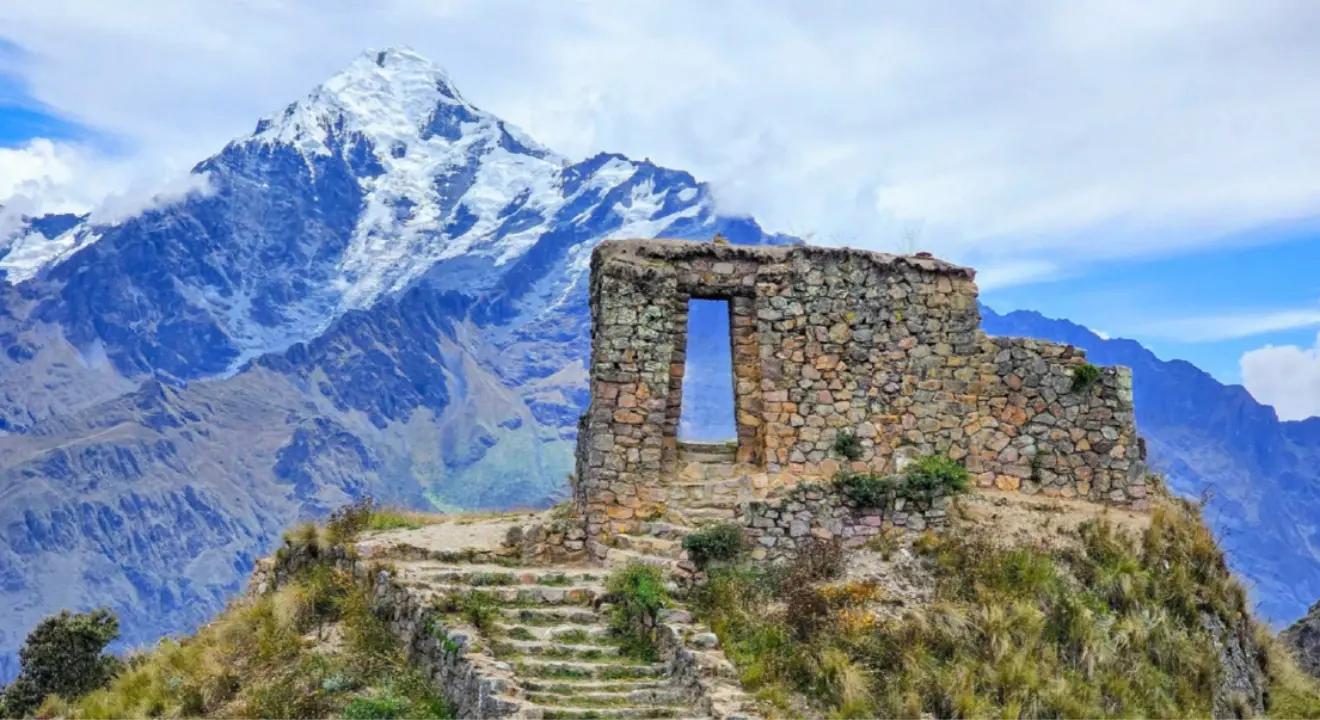
Inti Punku, which in Quechua means Gate of the Sun, is an ancient Inca archaeological site located in the heights of Ollantaytambo, in the Sacred Valley of the Incas. This sacred place was used as a ceremonial point and natural viewpoint, from which spectacular views of the valley and surrounding mountains can be enjoyed. The hike is short but demanding, rewarding visitors with history, landscape, and a deep connection to the Andean worldview.
History of Inti Punku
The Inti Punku of Ollantaytambo is believed to have been built during the Inca period as a ceremonial and observation space, linked to Andean cosmovision and sun worship. Unlike the Inti Punku of Machu Picchu, this site was not an entrance gate to Machu Picchu, but a sacred viewpoint related to the visual control of the Sacred Valley and possible agricultural and astronomical rituals.
Its location high above the valley suggests that it could also have served territorial surveillance functions, allowing the Incas to observe roads, crop fields, and nearby settlements.
¿What does the name Inti Punku mean?
Inti Punku is a Quechua term that translates as “Sun Gate” (Inti = sun, Punku = gate). For the Incas, the sun was a sacred deity, source of life and balance. Therefore, many elevated places aligned with the sun’s movement received this name.
In the case of Ollantaytambo, Inti Punku represents a space of spiritual connection, where the landscape, sky, and mountains integrate into an environment of deep cultural significance.
How to get to Inti Punku of Ollantaytambo
1. How to get to Ollantaytambo from Cusco
- Before starting the hike, it is necessary to reach the town of Ollantaytambo.
- Distance: approximately 72 km
- Travel time: 1 hour 45 minutes to 2 hours
2. Transport options:
- Public transport (colectivos or buses) from Cusco
- Private taxi or rental vehicle
- Tourist transport through the Sacred Valley
- The route crosses Andean landscapes, agricultural fields, rivers, and traditional towns of the Sacred Valley.
- Starting point of the hike
- The hike to Inti Punku starts within the town of Ollantaytambo, usually from the main square or nearby streets that ascend toward the mountain.
- There is no ticket office or entry control.
- The trail is visible and used by local residents.
- A guide is not required, although it can be useful for historical information.
Hike details
- Route type: mountain trail
- Hiking duration (one way): 1.5 to 2 hours
- Round trip duration: 3 to 4 hours
- Difficulty level: moderate
- Approximate altitude: 3,900 – 4,000 m a.s.l.
The path is a constant uphill, with some steep sections. It is not technical, but the altitude and physical effort make it advisable to proceed slowly and take breaks.
The Cachiqata Quarries
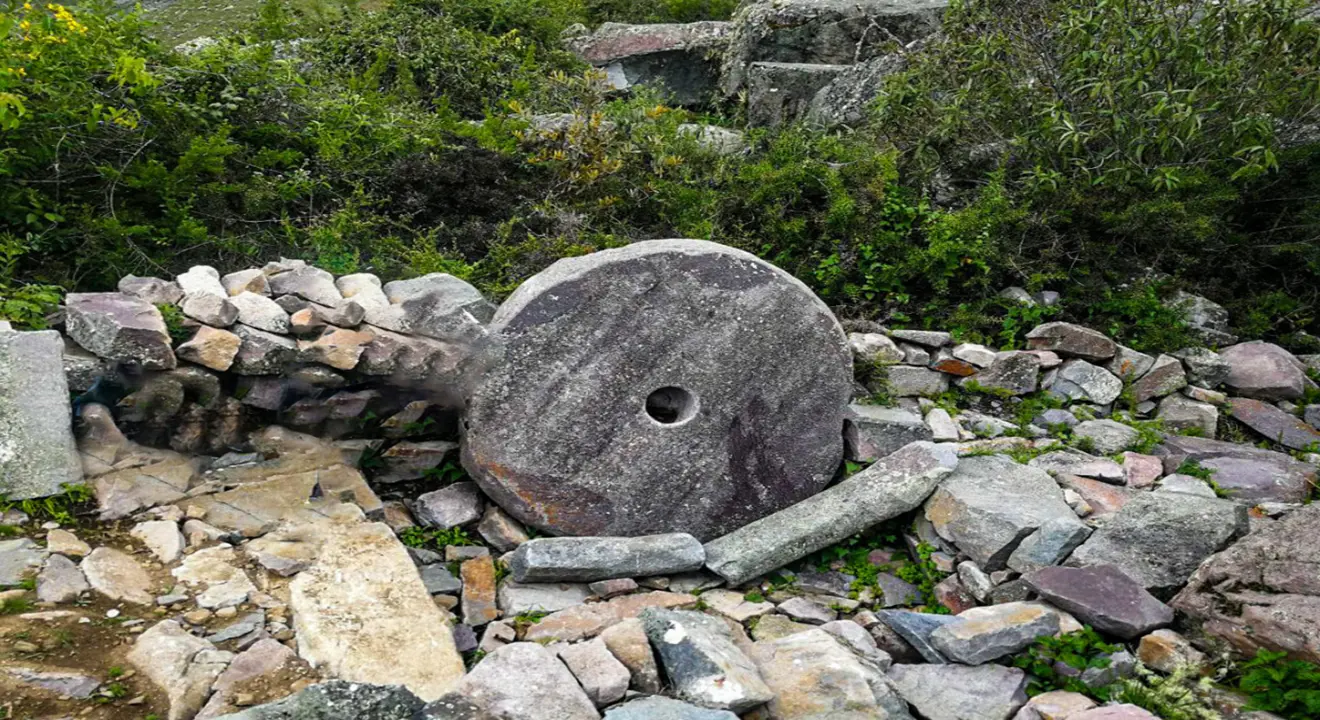
After walking approximately 6 kilometers, surpassing more than half of the ascent, you reach the Cachiqata Quarries, one of the most fascinating and least known places in the Sacred Valley of the Incas. This site was a key source of stone extraction during the Inca Empire and played a fundamental role in the construction of temples, fortresses, and ceremonial complexes in the region, especially in Ollantaytambo.
The quarries extend over a mountainside and still retain clear evidence of Inca work, allowing us to understand how this civilization mastered stone engineering and handling without the use of metal tools or modern technology.
An open-air Inca workshop: In Cachiqata, you can observe partially carved stone blocks, some abandoned mid-process, suggesting that extraction was suddenly interrupted, possibly after the arrival of the Spaniards. These blocks reveal the cutting, polishing, and transportation techniques used by the Incas, as well as the marks left by harder stone tools.
From this place, you can see certain constructions and objects left mid-production; it is an ideal spot to rest, as well as to explore and discover all its mysteries.
The Inti Punku of Ollantaytambo
From the Cachiqata Quarries, the hike to Inti Punku continues in a constant and demanding ascent, where the trail becomes steeper and the landscape more open. As you gain height, the Sacred Valley begins to look smaller and smaller, while the mountains dominate the horizon.
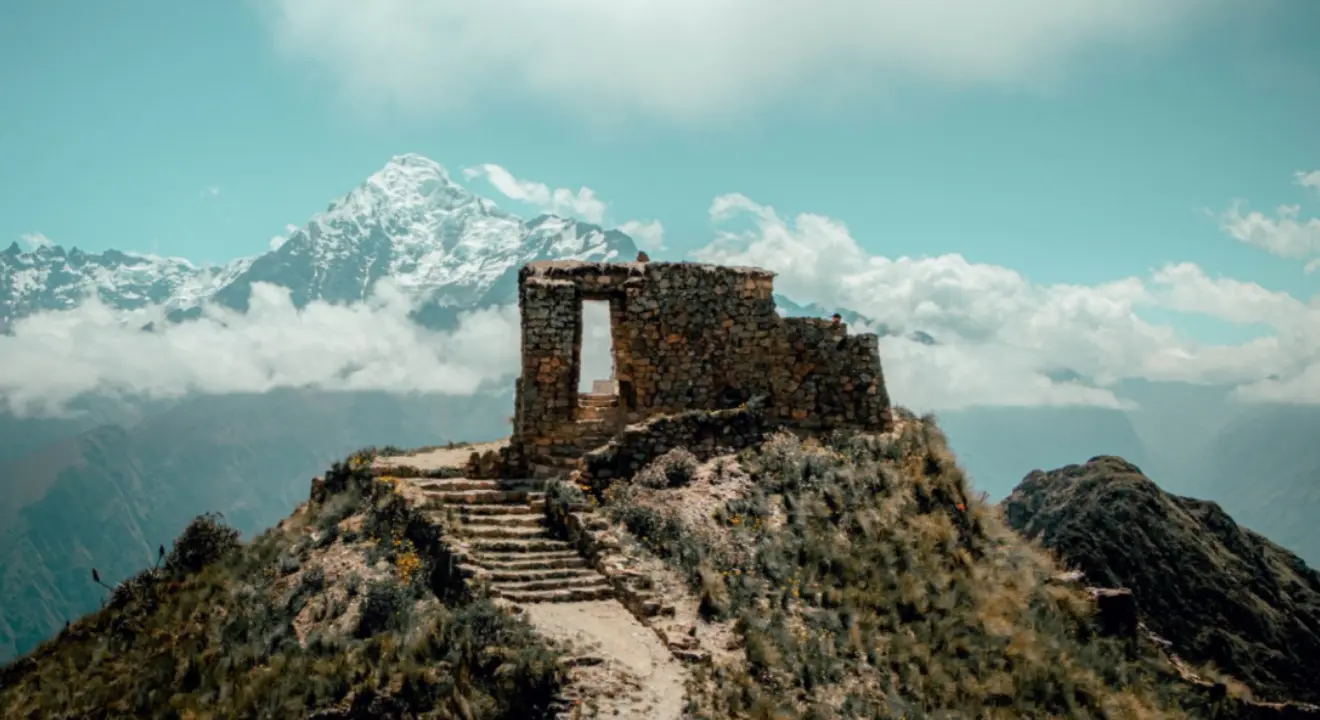
When approximately one kilometer remains to reach it, the stone silhouette of Inti Punku becomes visible in the distance. That first sighting is usually a key moment of the hike: it acts as a final boost, renewing the energy of hikers to complete the last stretch.
Camping area and sunrise experience: During the route, a zone enabled for camping is crossed, used by travelers who wish to have a more complete experience. Many choose to spend the night at high altitude, aiming to witness the sunrise passing through the Sun Gate, a natural spectacle that connects directly with Inca cosmovision and their worship of the solar deity.
Seeing the first rays of the sun illuminating the mountains and crossing the stone threshold is, without a doubt, one of the most memorable moments of this route.
Best time to visit Inti Punku of Ollantaytambo
The best time to visit Inti Punku of Ollantaytambo is during the dry season, which runs from April to October. In these months, the weather is more stable, the days are usually sunny, and rainfall is scarce, making the hike safer and more enjoyable.
Ideal months
1. May, June, July, and August
These are the most recommended months. The sky is usually clear, the views of the Sacred Valley and the Verónica snowcapped mountain are spectacular, and the trails are in good condition.
Note: Nights and early mornings are cold, so it is important to wear warm clothing.
2. April and September
These are excellent transition months. There are fewer tourists, the landscape still retains green tones, and the weather is balanced, combining sunny days with pleasant temperatures.
Rainy season (November to March)
During these months, especially between January and February, rains are frequent and the trail can become slippery and more demanding. Although the landscape becomes very green and attractive, it is not the most recommended option for those seeking a safe and hassle-free hike.
Traveler tip: If you want a more special experience, visit Inti Punku between June and July, when the sun rises more aligned with the gate, reinforcing its spiritual meaning and offering a unique moment for photography.
¿What time to go?
It is recommended to start the hike very early in the morning, both in the dry and rainy seasons. This allows avoiding the midday heat and increases the chances of enjoying clear views and, if you are lucky, a spectacular sunrise.
¿How is the descent from Inti Punku of Ollantaytambo?
The descent from Inti Punku of Ollantaytambo is done via the same trail used for the ascent, and although it is less physically demanding, it requires attention and care, especially in certain sections.
The path is steep in some areas, with dirt trails, loose stones, and irregular Inca steps. During the dry season, the descent is relatively stable, but in the rainy season the ground can become slippery, so it is recommended to go down calmly.
The descent usually takes between 2 and 2.5 hours, depending on your pace, how many breaks you take, and the weather that day. It is not a race; descending calmly will allow you to better enjoy the landscape and protect your knees.
What to bring
- Layered clothing: Windbreaker or waterproof jacket, fleece or light coat. The weather changes quickly between morning, midday, and afternoon.
- Trekking footwear: Hiking shoes or boots with good soles and grip; the trail has loose stones and steep sections.
- Sun protection: Hat or cap, sunglasses, and sunscreen. Radiation is strong due to the altitude.
- Small backpack: Comfortable and light to carry essentials during the hike.
- Water: At least 1.5 to 2 liters per person to stay well hydrated.
- Energy snacks: Nuts, energy bars, or chocolate.
- Trekking poles (optional): Very useful both on the ascent and descent, especially to protect the knees.
- Camera or phone with charged battery: The views are worth it.
- Cash: There are no stores or ATMs along the route.
- Identification: Passport (foreign tourists) or ID (national tourists).
What not to bring
- Large backpacks or heavy luggage: They will only make the hike more difficult.
- Inadequate footwear: Sandals, flat shoes, or smooth sneakers are not recommended.
- Unnecessary valuables: Expensive jewelry or delicate electronic equipment.
- Plastics and trash: There are no disposal points; everything you bring must be taken back.
- Very heavy clothing: Bulky coats that you will then have to carry.
Curious fact:
Unlike the famous Inti Punku of Machu Picchu, Inti Punku of Ollantaytambo is little known and receives very few visitors. From this point, the Incas watched the sunrise and the Verónica snowcapped mountain, considered a sacred apu, which made this place not only a natural viewpoint but also a ceremonial and spiritual space within the Sacred Valley.
We are accredited by