CHINCHERO, ANDEAN TRADITION AND ARCHAEOLOGICAL PARK
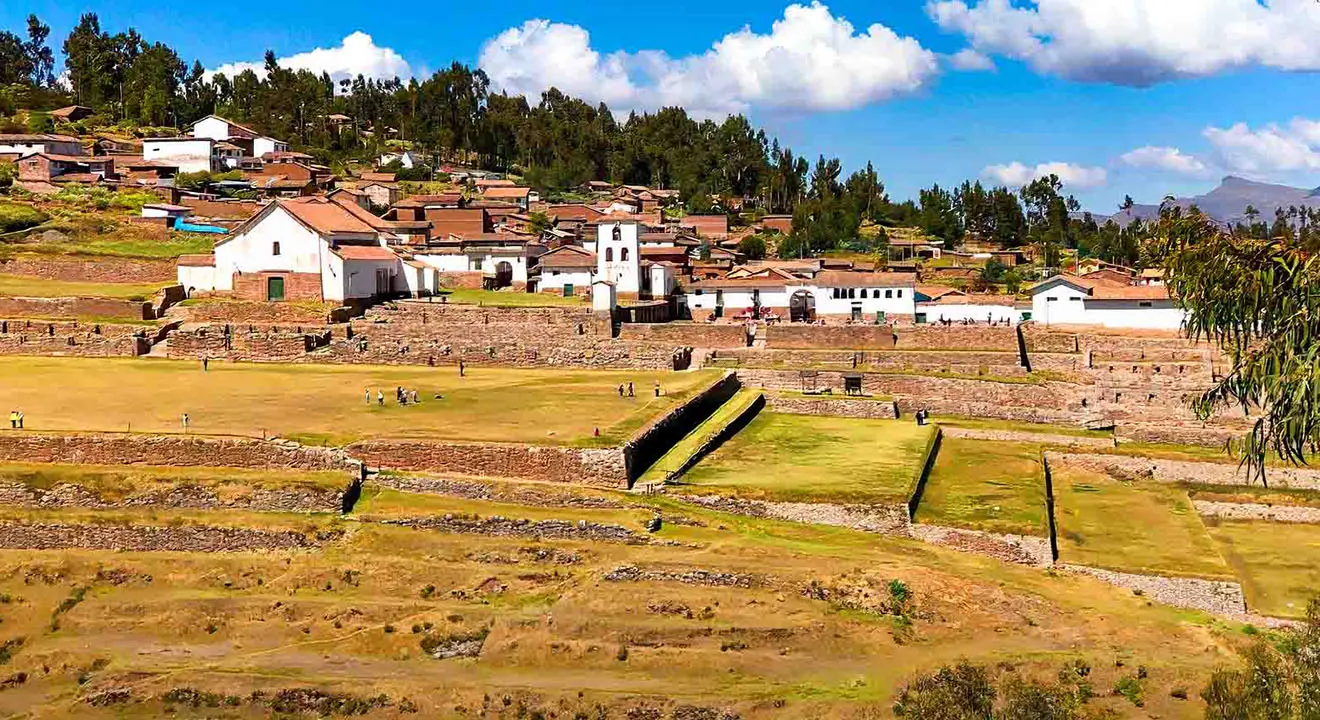
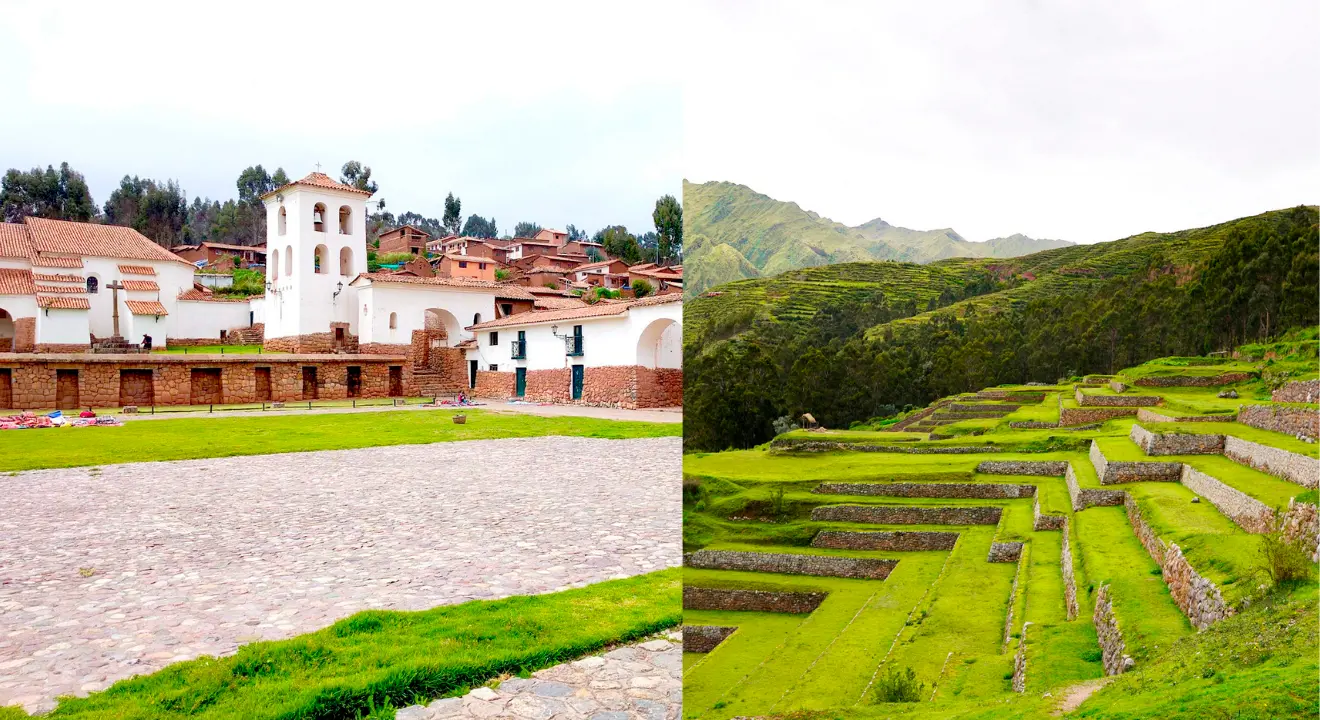
The Archaeological Park of Chinchero is an important Inca site in the Sacred Valley, located near Cusco. It stands out for its agricultural terraces, stone walls, and the colonial church built on ancient Inca foundations, showing the union between Inca culture and the colonial era. It is an ideal place to learn about history, living traditions, and enjoy panoramic views of the Andes.
History
Chinchero is one of the oldest and most traditional towns in the Sacred Valley. Before the arrival of the Incas, the area was already inhabited by Andean communities mainly dedicated to agriculture. With the expansion of the Inca Empire, Chinchero gained great importance during the reign of the Inca Túpac Yupanqui, who ordered the construction of a palace here and turned the place into an urban, agricultural, and ceremonial center.
With the arrival of the Spaniards in the 16th century, much of the Inca constructions were destroyed. On the foundations of the ancient palace, a colonial church was built, a symbol of the conquest and the cultural change experienced by the region. Despite this, Chinchero was never abandoned and today it is considered a living town, where Inca and colonial history coexist with current traditions.
Altitude
The Archaeological Park of Chinchero is located at an approximate altitude of 3,760 meters above sea level, which is equivalent to 12,336 feet (ft).
Due to this altitude, it is normal to feel colder and drier air, so it is recommended to walk slowly, stay well hydrated, and wear warm clothing, especially in the mornings and in the late afternoon.
How to get there
Chinchero is 30 km from Cusco, following the route to the Sacred Valley. The road is completely paved and crosses Andean landscapes with agricultural fields and views of snow-capped mountains. Due to its altitude, it is recommended to go slowly, stay well hydrated, and bring warm clothing, since the climate is usually cold, especially in the morning and at sunset.
Chinchero: Tradition and culture
The traditional town of Chinchero is one of the most authentic places in the Sacred Valley. It is characterized by preserving living Andean customs, visible in its traditional clothing, its local fairs, and especially in textile art, a heritage passed down from generation to generation.
Here, families still use ancestral weaving techniques, using alpaca and sheep wool, dyed with natural dyes obtained from plants and minerals. In addition, the town maintains a strong connection with agriculture, reflected in its fields and terraces that surround the area.
Chinchero is not only an archaeological site, but a living community, where visitors can closely experience Andean daily life, its traditions, and its deep connection with the land and history.
The Ancient Inca Palace of Chinchero
It is believed that around the year 1480, during the reign of the Inca Túpac Yupanqui, a palace was built in Chinchero where he lived with his family. This space occupied the heart of what we now know as the archaeological site and was an important place for rest and for governing the empire.
Túpac Yupanqui was the son of Pachacútec, the great Inca who ordered the construction of Machu Picchu, and he continued expanding the Inca Empire. According to historical accounts, it was in this same palace where the Inca died in 1493, under circumstances that still generate debate among historians.
With the arrival of the Spaniards in 1536, the palace was destroyed and much of the town of Chinchero was reduced to ashes. Today, what remains of this ancient palace are its stone foundations, some walls, and niches, enough to imagine the importance and greatness this place once had in its time.
Main attractions of the Archaeological Park of Chinchero
1.Agricultural terraces (andenes)
As you walk through the site, you will see wide terraces built by the Incas for high-altitude farming. These structures show how they adapted to the Andean terrain and took advantage of every available space.
2. Finely crafted stone walls
The walls you will find were part of ancient Inca palaces and enclosures. The precision with which the stones were carved and assembled continues to amaze visitors to this day.
3. Remains of the palace of the Inca Túpac Yupanqui
Here, the bases and some structures of the palace where the Inca resided are preserved. These remains allow visitors to imagine the political and ceremonial importance that Chinchero once had.
4. Water channels
During the visit, you can also observe water channels that are still functioning, reflecting the advanced hydraulic system developed by the Incas.
5.Colonial church
A colonial church was built on the Inca foundations, a clear example of the overlapping of cultures after the arrival of the Spaniards.
6. Panoramic views
From the park, visitors can enjoy impressive views of the Sacred Valley and the Andean mountains that surround the entire complex.
Textile Centers
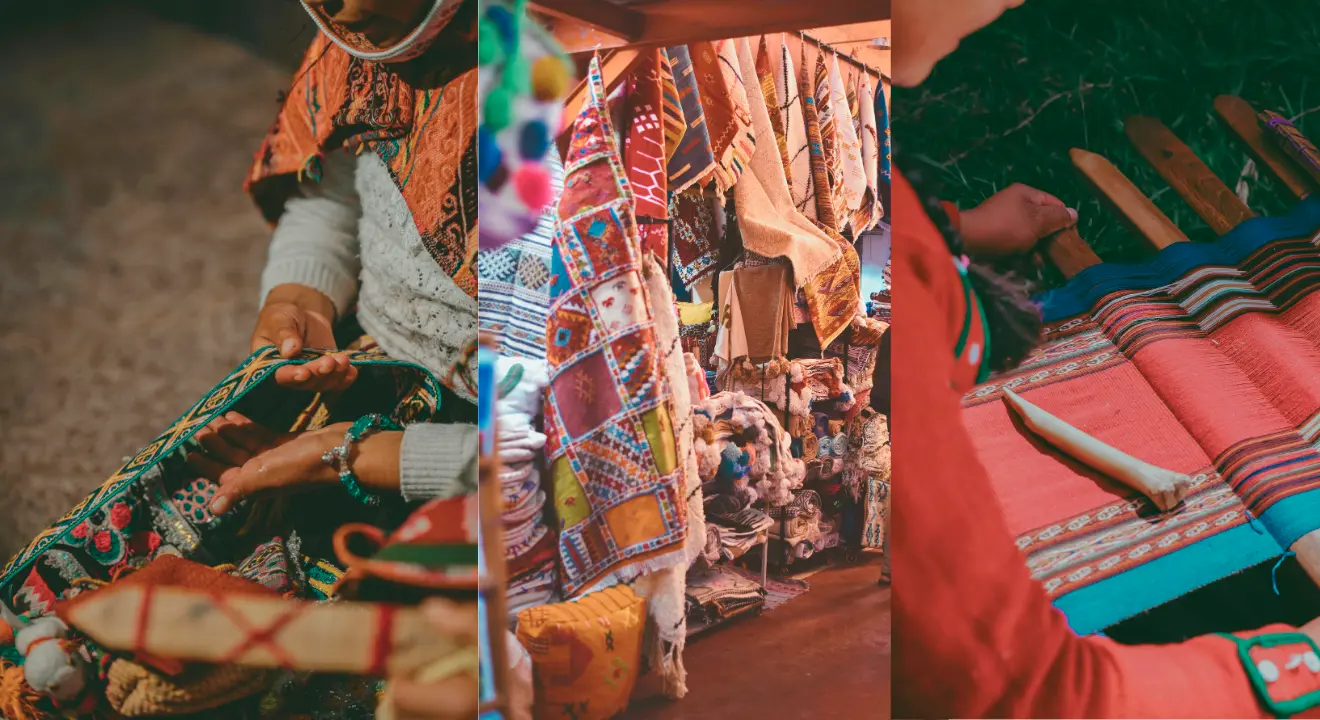
Chinchero is recognized as one of the main textile centers of the Sacred Valley. In these spaces, local families keep alive ancestral weaving techniques that have been passed down from generation to generation.
During visits to the textile centers, tourists can observe live demonstrations of the weaving process, from spinning alpaca or sheep wool to dyeing with natural dyes obtained from plants, minerals, and cochineal. Each design and color has a cultural meaning related to Andean identity.
In addition to learning about this tradition, visitors have the opportunity to purchase handmade artisanal textiles, directly supporting the local economy and contributing to the preservation of this cultural heritage.
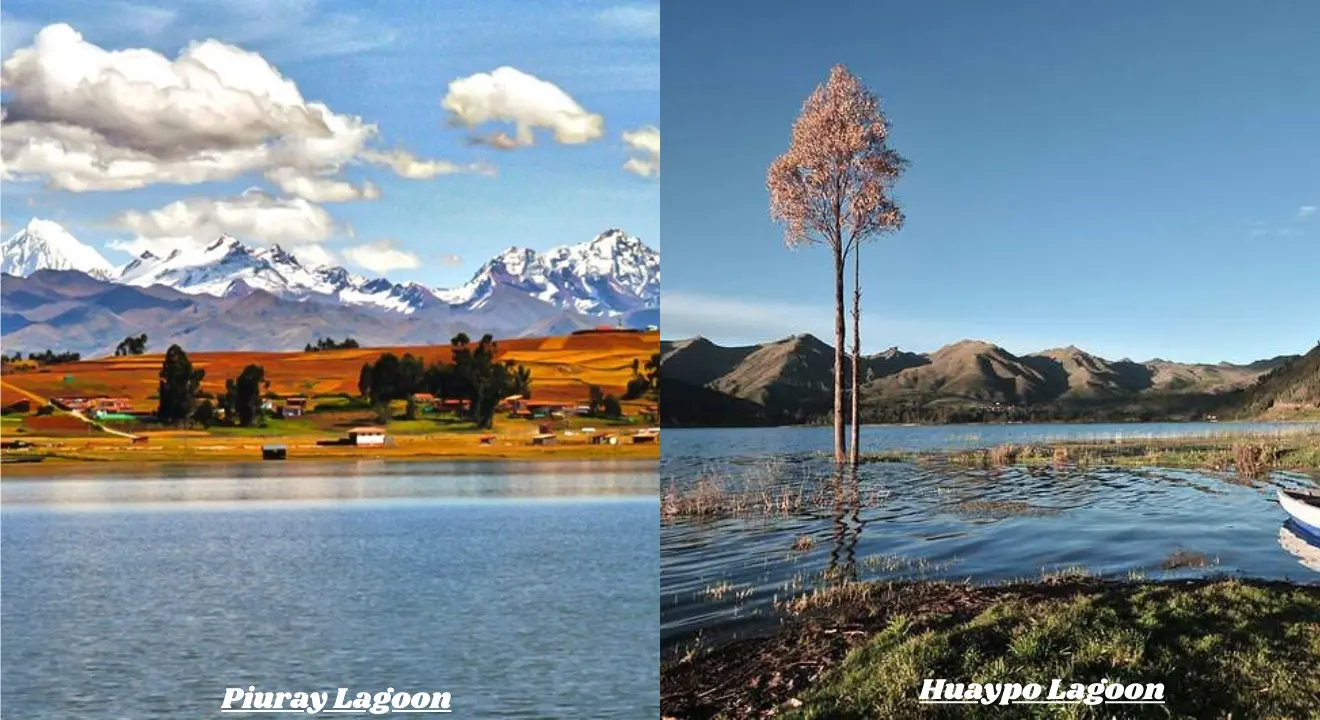
Piuray and Huaypo Lagoons: beauty and legend in Chinchero
Chinchero is located near two impressive high-Andean lagoons: Piuray and Huaypo, separated by about 18 kilometers. Since Inca times, these lagoons have been fundamental as a source of water for Cusco and the towns of the Sacred Valley, demonstrating their importance both historically and ecologically.
The surrounding landscape is simply spectacular. From their shores, it is possible to see mountains and snow-capped peaks such as Verónica, Soray, and Apu Salkantay, creating an ideal setting for lovers of photography and nature.
In addition, the lagoons offer opportunities for outdoor activities such as kayaking or stand-up paddleboarding, which allow visitors to enjoy the environment from the water. For these experiences, it is recommended to coordinate with local tourism agencies.
These lagoons are also surrounded by mystery and tradition. Legend says that during the final journey of the Inca Manco Cápac, two of his children were transformed into lagoons: the boy who went ahead became Huaypo, while the girl who stayed behind gave origin to Piuray. This story reflects the deep connection between Inca culture and the nature that surrounded them.
Visiting Piuray and Huaypo not only allows visitors to admire their beauty, but also to learn about their historical and cultural importance, making Chinchero a complete destination that combines landscape, adventure, and tradition.
Experiences and Activities
Visiting Chinchero is more than just touring an archaeological site; it is an experience that connects history, living culture, and the Andean landscape. Walking through the park allows visitors to understand how the Incas organized their territory and how this space continues to be part of local life.
Contact with the community is one of the most valuable aspects of the visit. Through textile art, customs, and daily life, visitors can learn about traditions that have remained alive since ancestral times. Each activity offers an authentic way to approach Andean culture.
In addition, the natural environment invites visitors to enjoy the landscape calmly, observe the mountains, take photographs, and experience the Sacred Valley from a more peaceful and authentic perspective. Chinchero offers a complete cultural experience.
Best time to visit the Archaeological Park of Chinchero
The best time to visit the Archaeological Park of Chinchero is during the dry season, between May and October. During these months, the weather is more stable, with sunny days and little rainfall, which allows visitors to explore the terraces, walls, and Inca structures more comfortably and enjoy clear views of the Sacred Valley.
During the rainy season, from November to April, the park presents a greener and more attractive landscape, although the rains can make the paths slippery, especially between January and February. Even so, visits are still possible with proper equipment.
Choosing the dry season makes for a better experience to learn about the architecture, history, and natural environment of the Archaeological Park of Chinchero.
What to bring
- Appropriate footwear: sneakers or trekking boots with good grip, as the ground can be uneven.
- Layered clothing: T-shirt, light sweater, and jacket, to adapt to temperature changes during the day.
- Weather protection: hat, sunscreen, and during the rainy season, a raincoat.
- Water and light snacks: to keep your energy during the walk.
- Camera or phone with battery: the landscapes and the archaeological site are worth it.
- Cash: useful for entrance fees, handicrafts, or to support the local community.
- Small backpack: only with what is necessary to walk comfortably.
What not to bring
- Heavy luggage: the route is short, but you will walk a lot.
- Very formal or delicate clothing: this is not a place for that type of outfit.
- Flat or high-heeled shoes: they increase the risk of slipping.
- Speakers or excessive noise: the site invites respect and tranquility.
- Trash: everything you bring with you must return with you.
- Unnecessary valuable items: to avoid losses during the visit.
Fun Facts
- Chinchero is known as one of the towns with the strongest textile tradition in the Sacred Valley, where ancestral weaving techniques and natural dyes are still used.
- The Archaeological Park was built on an Andean plateau, which allows privileged views of the Sacred Valley and several snow-capped mountains on clear days.
- The palace of the Inca Túpac Yupanqui occupied the center of the current archaeological site, and today its bases can still be seen among the terraces and walls.
- The colonial church of Chinchero was built directly on Inca structures, a clear example of cultural change after the Spanish conquest.
- The water channels built by the Incas still function today, demonstrating their advanced knowledge of hydraulic engineering.
- Unlike other archaeological sites, Chinchero is a living town, where ancestral traditions are part of the daily life of its inhabitants.
We are accredited by