The imposing snow-capped Salkantay
Nevado Salkantay, with its impressive 6,271 meters above sea level, rises as a true giant of ice and rock in the heart of Cusco. Its majesty dominates the landscape of the Sacred Valley, and its name in Quechua, “Salqa Antay,” means “Wild Mountain,” reflecting the power and mystery that surround it. Considered an Apu, or sacred mountain, it is revered by Andean communities as the guardian and protector of the valley, transmitting a spiritual aura that can be felt in every corner. Salkantay is a perfect destination for adventurers, trekking lovers, and those seeking unique experiences, offering not only a physical challenge but also the opportunity to connect with Inca spirituality and the pure energy of the mountain.
Location
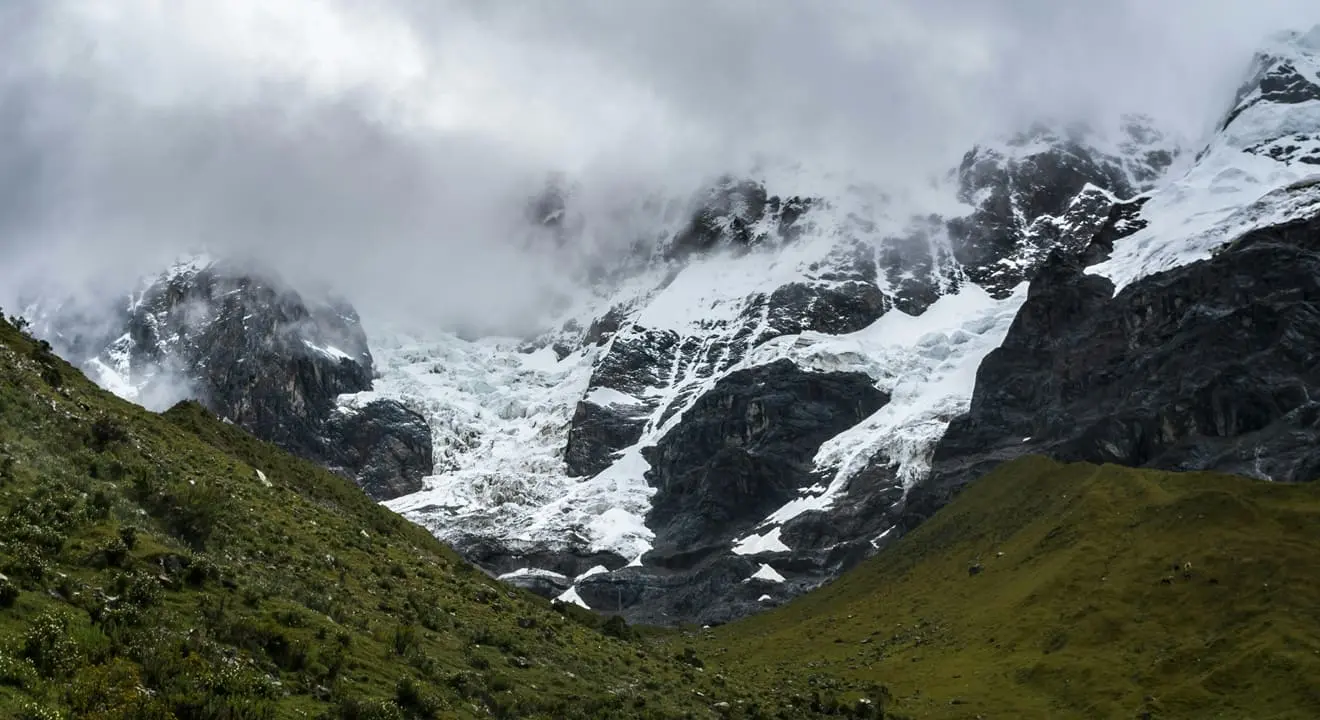
Nevado Salkantay is located in the Vilcabamba Mountain Range, in the Cusco region of Peru. It lies between the districts of Mollepata, Limatambo, and Santa Teresa, within the provinces of Anta and La Convención, near the Sacred Valley of the Incas. It is also part of the area through which the Salkantay Trek to Machu Picchu passes, although it is not located directly within the districts of Ollantaytambo or Machu Picchu.
History
Since ancient times, Nevado Salkantay has been more than just a mountain: it is a silent guardian of the Sacred Valley. Before the Incas, local communities already respected it and offered gifts to the earth to ask for protection and good harvests. With the arrival of the Incas, Salkantay became an Apu, a “great lord” in Quechua, and rituals of offerings of coca, corn, and animals continued, honoring its power and energy.
Despite the attempts of the conquerors to erase these traditions, the connection with the mountain never disappeared. Today, Andean inhabitants continue to venerate Salkantay, and those who visit it can feel its imposing presence and its magic, admiring its glaciers, snowy peaks, and deep valleys that seem to tell stories from centuries past.
What altitude is it located at
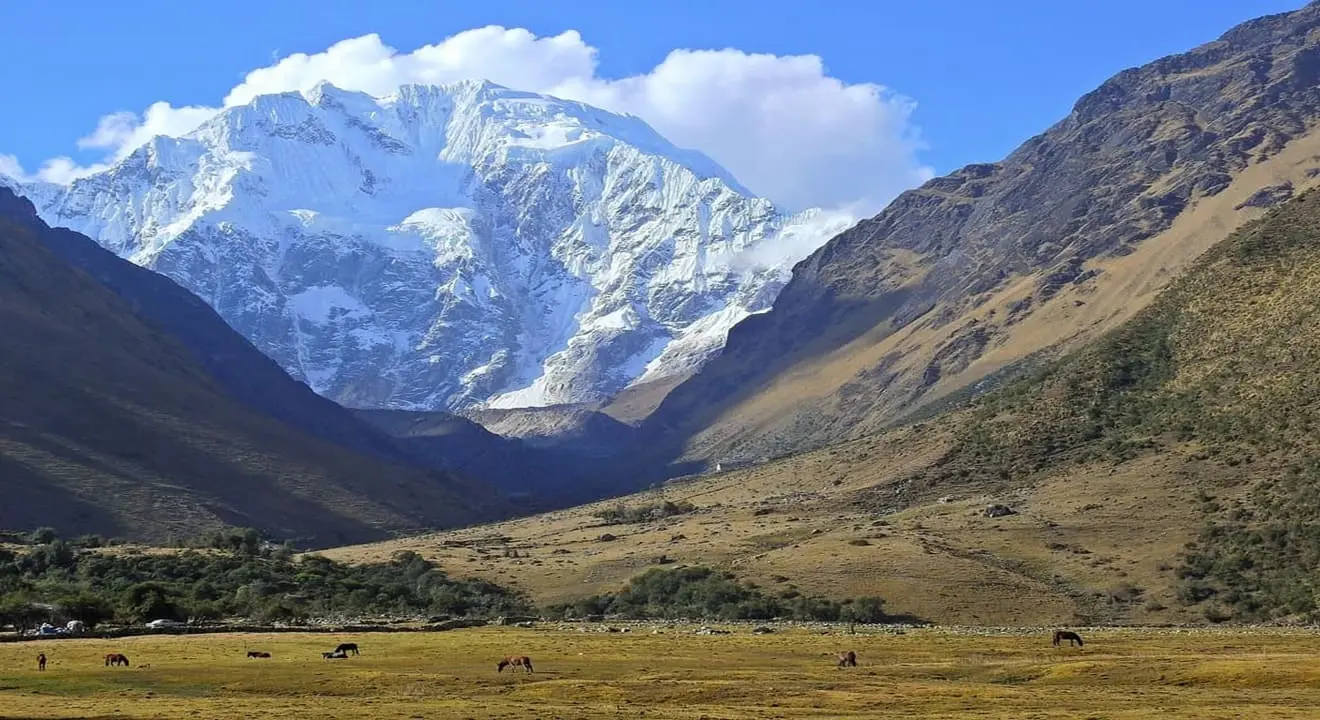
Nevado Salkantay, with its 6,271 meters above sea level, is the second highest mountain in Cusco, after Ausangate. Its majesty dominates shining glaciers, snowy peaks, and deep valleys that take your breath away.
Although the summit reaches 6,271 m, trekkers who hike the Salkantay Trek reach their highest point at the Salkantay Pass, at 4,650 meters above sea level, a challenge that requires prior acclimatization in Cusco.
Capacocha: sacrifices on sacred snow-capped mountains
During the Capacocha, the Incas carried out a complex religious ritual in which children considered the healthiest and most beautiful from their communities were selected. These children were prepared with prior ceremonies, dressed in fine clothing and adorned with ceremonial objects, and then transported in procession to the summits of the sacred snow-capped mountains. Once at the top, they were offered as sacrifices to the gods to ensure the protection of the people, the fertility of the land, and the well-being of the community, being buried together with offerings such as llamas, ceramics, and coca leaves, their bodies preserved in the extreme cold of the mountains.
Architecture and structure
The Salkantay Trail is not only a trekking route, but also an ancient Andean corridor that reflects the extraordinary ability of the Incas to integrate with nature. Unlike the classic Inca Trail, this route was designed as a high-mountain path, adapted to extreme terrain, glaciers, and deep valleys, always respecting the natural geography.
Its structure combines stone paths and compacted earth, stairways carved directly into the rock, and drainage systems that allowed safe passage even during the rainy season. Along the route there are remains of Inca tambos, small rest and control centers, as well as ceremonial spaces strategically located facing sacred mountains or apus, with Nevado Salkantay being the most important of all.
The Inca constructions along this route use local stone, slightly inclined walls, and trapezoidal doorways, techniques that guaranteed stability against earthquakes and extreme climates.
What you should know about the Salkantay route
This place is one of the most impressive hikes in Cusco. The Salkantay route takes travelers through incredible high-mountain landscapes, glaciers, and Andean valleys, until reaching the picturesque town of Aguas Calientes, the gateway to Machu Picchu. Along the way, the imposing Nevado Salkantay, whose summit reaches 6,271 meters, dominates the landscape and accompanies the journey, turning this experience into one of the most renowned trekking routes in the world.
Main facts:
- Duration: between 4 and 7 days, depending on the chosen itinerary.
- Approximate distance: 60 kilometers.
- Difficulty: from moderate to demanding; good physical condition is recommended.
- Notable altitudes:
- Highest point: Salkantay Pass (4,650 m.a.s.l.).
- Lowest point: Aguas Calientes (2,040 m.a.s.l.).
- What makes this route special:
- Nevado Salkantay and its glaciers.
- The famous Humantay Lagoon, with turquoise waters.
- Landscapes that combine Andes, cloud forest, and high jungle, with great diversity of flora and fauna.
- A perfect route for those seeking adventure, nature, and an authentic connection with the Andes before reaching the majestic Machu Picchu.
The natural richness of the Salkantay route
The Salkantay route to Machu Picchu crosses an extraordinary variety of ecosystems, making it one of the most biodiverse hikes in Peru. From the high Andean mountains to the cloud forest, the environment constantly changes, offering unique landscapes and wildlife at every stage of the journey.
Along the way, travelers can observe high-Andean grasslands, glaciers, deep valleys, and humid forests, where native plants grow adapted to different altitudes and climates. This natural diversity creates a special balance that has been respected and valued since Inca times and continues to be one of the greatest attractions of the Salkantay Trek today.
Wildlife of Salkantay: life in the Andes and the jungle
The Salkantay route crosses landscapes that are as diverse as they are alive, where nature reveals itself at every stage of the path. From high mountain zones to the cloud forest and the jungle, the environment changes constantly, creating a unique natural balance that accompanies the traveler throughout the entire journey.
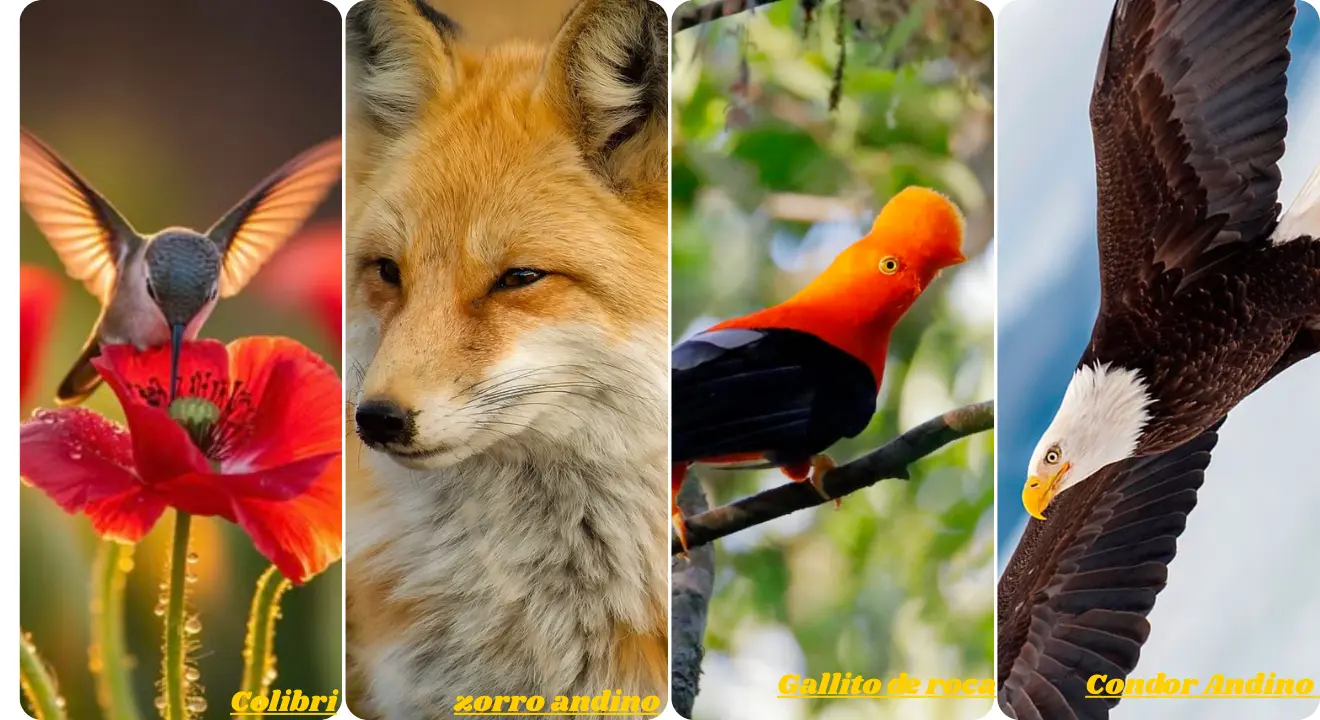
- Andean condor: The largest flying bird of the Andes, visible in high areas and mountain passes.
- Llama: A domesticated Andean animal, common in the highland zones of the route.
- Alpaca: Similar to the llama, valued for its wool and present near local communities.
- Andean vizcacha: A rodent that lives among rocks and cliffs, frequent in high mountain areas.
- Andean fox: An agile and shy mammal, usually seen at dawn or dusk.
- Spectacled bear: An emblematic species of the cloud forest; sightings are rare.
- Hummingbirds: Various species that inhabit the cloud forest, known for their colors and speed.
- Andean cock-of-the-rock: National bird of Peru, inhabits jungle and humid forest areas.
- Toucans: Tropical birds with large beaks, visible in the lower and more humid sections.
- Andean frogs and amphibians: Indicators of healthy ecosystems, especially in humid zones.
Exotic and native flora along the Salkantay route
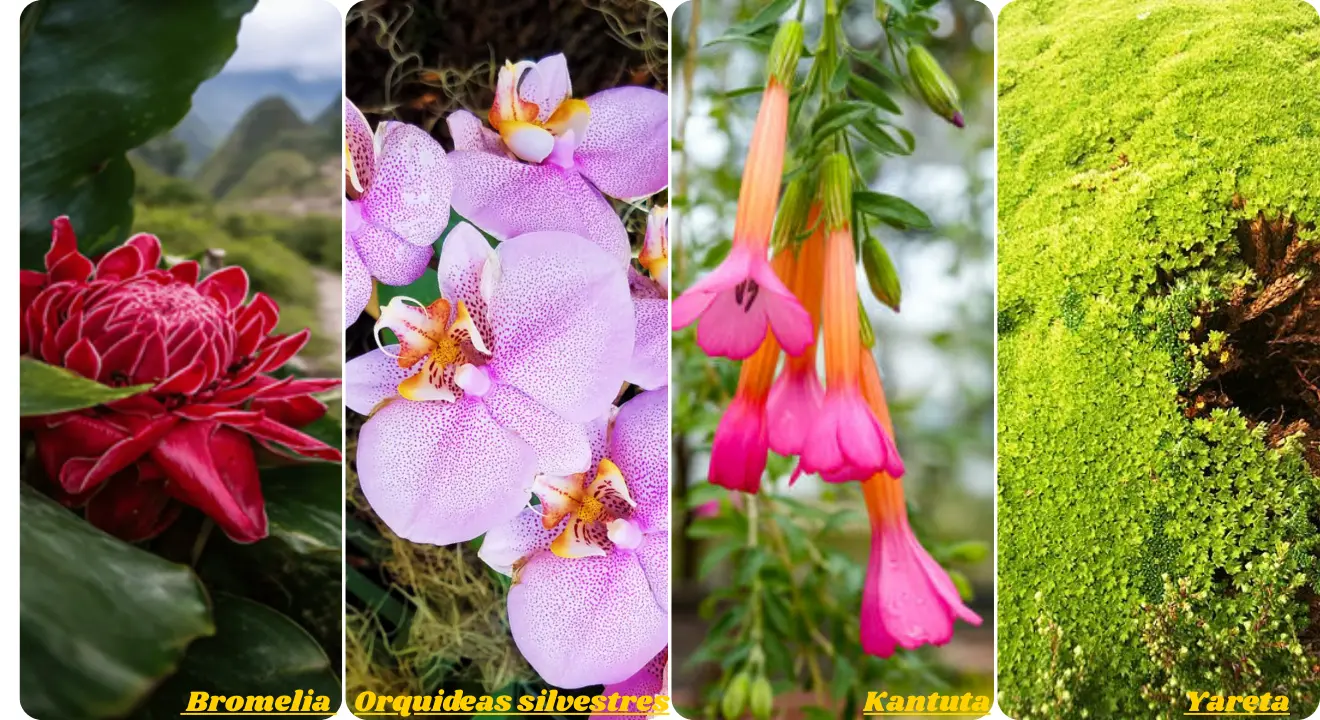
- Ichu: Andean grass resistant to cold and high altitude.
- Yareta: Compact plant that grows in high and rocky areas.
- Queuña (Polylepis): Andean tree that forms high-altitude forests.
- Kantuta: Sacred Andean flower, a cultural symbol of Peru.
- Wild orchids: Present in the cloud forest and humid areas.
- Ferns: Abundant in the jungle and misty areas.
- Mosses and lichens: Cover rocks and trees in humid environments.
- Andean bamboo (Chusquea): Common in the high jungle near Machu Picchu.
- Bromeliads: Epiphytic plants that store water in their leaves.
¿How is the Nevado Salkantay route traveled?
The Nevado Salkantay route is one of the longest and most complete hikes in Cusco, since it does not start from a single point nor follow only one path. It is a continuous journey that connects the high Andes with the jungle and finally leads to Machu Picchu.
The Salkantay Trek is a long-distance hike that is normally done in 5 days and covers about 60 kilometers. The journey begins in the high areas, near the glaciers of Nevado Salkantay, one of the most imposing mountains in Cusco, and gradually descends toward the jungle.
Along the way, hikers pass through Andean valleys, crystal-clear lagoons such as Humantay, and cloud forests with great diversity of flora and fauna. It is a route designed for travelers who enjoy changing landscapes and physical challenges, since it reaches altitudes over 4,600 meters before descending to warmer climates.
Throughout the route, Andean cultural heritage, ancient Inca roads, and local communities can also be appreciated. All the effort has a great reward: the trail continues until reaching Aguas Calientes and culminates with a visit to the impressive citadel of Machu Picchu.
1. Salkantay Pass (4,650 m.a.s.l.)
This is the highest point of the trek and one of the most impressive moments of the journey. Here we are surrounded by glaciers and enormous mountains, and the feeling of being in the middle of such greatness is unique. Crossing this pass is a physical challenge, but the views make it totally worth it. From here, the descent begins toward greener valleys and the change of ecosystems on the way to Machu Picchu.
2. Wayraqmachay
After Salkantay Pass, we arrive at Wayraqmachay, an ideal resting area to recover energy. Here the landscape begins to change: we leave the high mountains behind and start to notice the transition toward the valleys. It is a good place to stop, take a deep breath, and enjoy the views while the body adapts to the descent.
3. Chaullay
After Wayraqmachay, we reach Chaullay, the entrance to the valley that will lead us toward milder climates. Here the change in landscape becomes evident: rivers become more visible, vegetation turns denser and greener, and the sounds of nature accompany us as we move forward. It is a place where the life of the valley can be felt, with small crops and paths that show how local communities live in harmony with the mountain. It is also a good point to rest, hydrate, and enjoy the surroundings before continuing toward the high jungle.
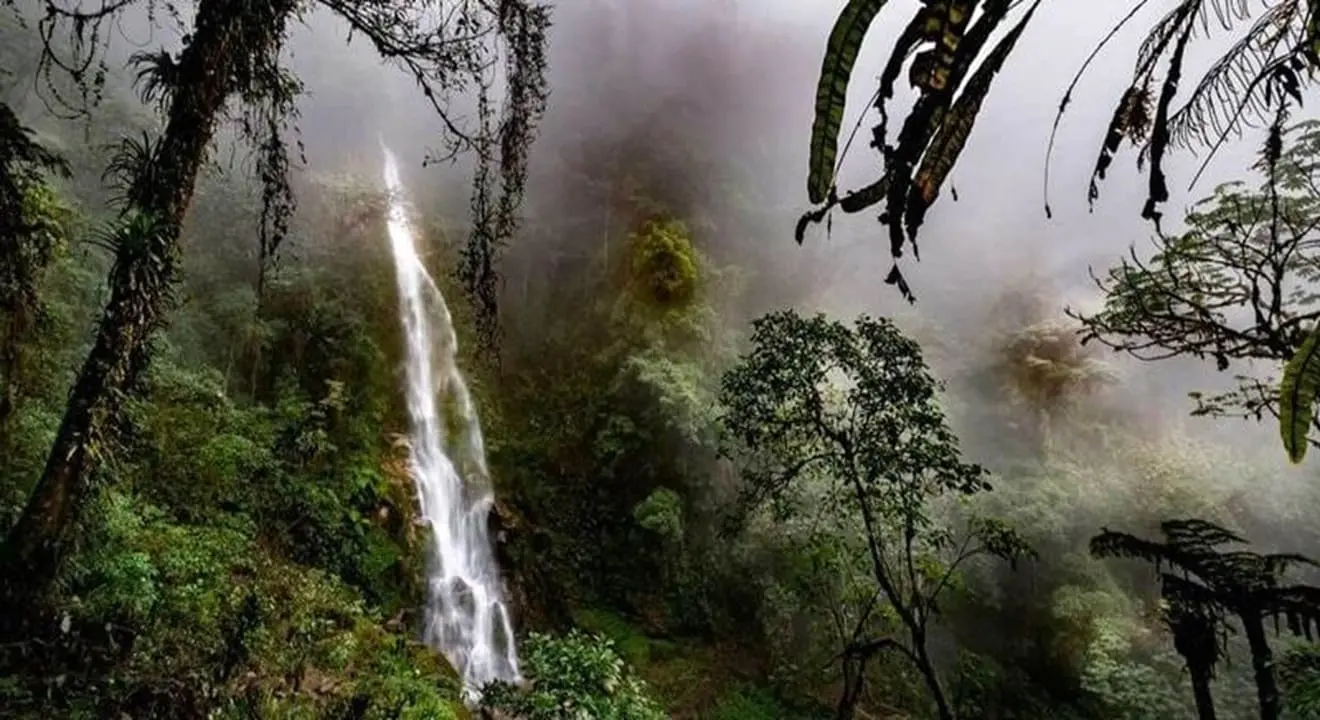
4. Cloud forest (Santa Teresa)
Here we enter the high jungle, a completely different ecosystem from the mountains. The air feels warmer and more humid, and the sounds of birds and waterfalls surround us. The vegetation is lush: giant ferns, orchids, and moss-covered trees fill the landscape, and coffee and local fruit plantations can be seen in some areas. This section connects us with the natural richness of the region and reminds us of the diversity found along the way to Machu Picchu.
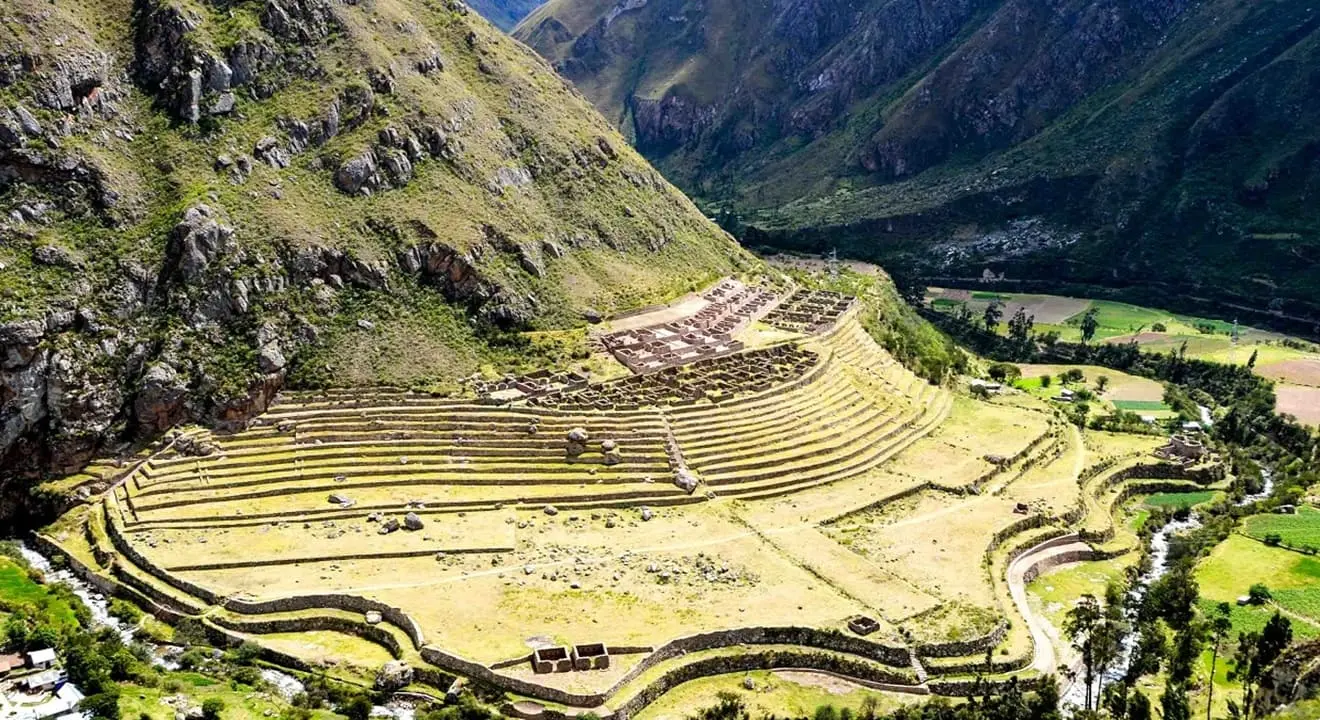
5. Llactapata (Inca archaeological site)
Llactapata is an important archaeological complex that gives us a glimpse of the ingenuity of the Incas. From here, you can enjoy a unique panoramic view of Machu Picchu in the distance, which makes the effort of trekking feel even more rewarding. It is an ideal place to stop, explore a little, and take photos, while appreciating how the Incas integrated their constructions into the mountains and nature.
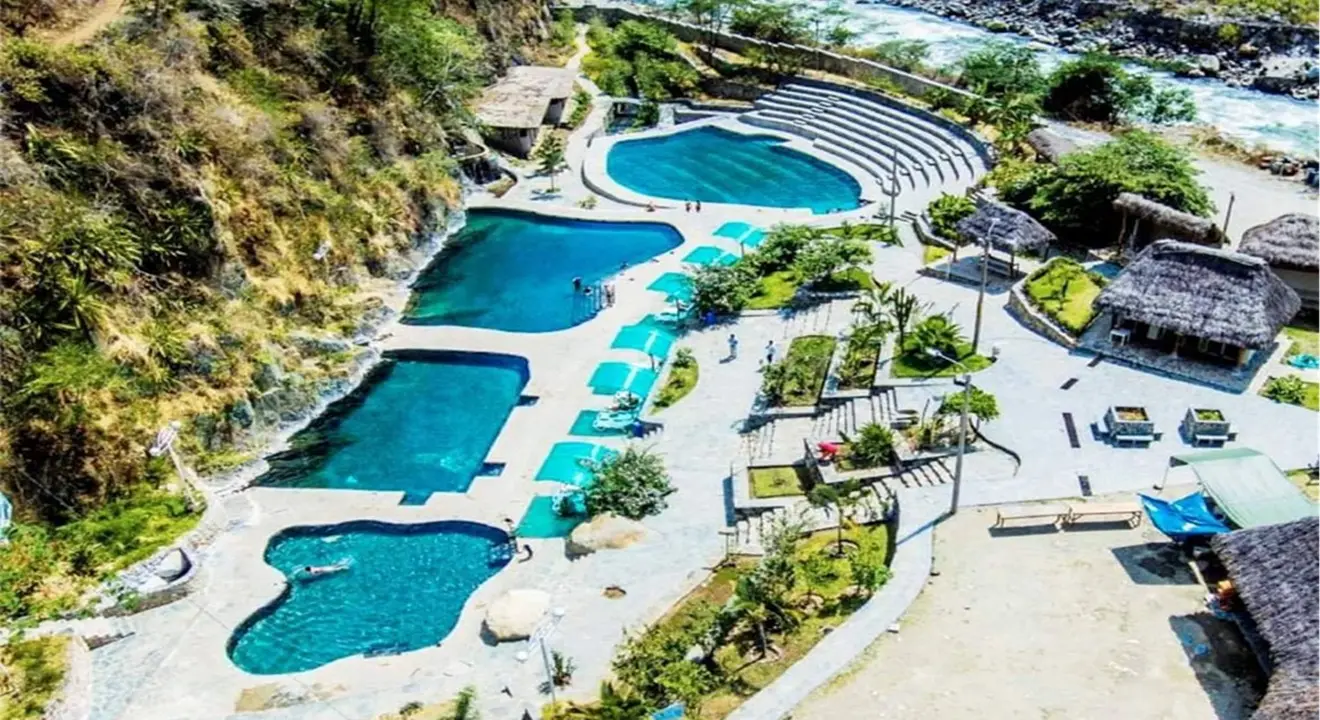
6. Hydroelectric Plant or Santa Teresa
From here, we have the option to connect with the railway or continue walking toward Aguas Calientes. The Hydroelectric area shows us a change in the landscape: larger rivers, bridges, and paths that cross the low jungle. It is a more relaxed section, ideal for resting a bit and preparing for the final stage of the trek before reaching the base town of Machu Picchu.
7. Colcamayo
After Hydroelectric, we arrive at Colcamayo, a beautiful section surrounded by crystal-clear rivers, small bridges, and vegetation that begins to feel more jungle-like. The sound of the water and the freshness of the environment make it an ideal place to rest and take photos. It is here where the final transition toward the low jungle before reaching Aguas Calientes is truly felt, and where the trail becomes calmer and more relaxed after the more demanding sections.
8. Aguas Calientes (Machu Picchu Town)
This is the place where hikers rest after the trek. It is surrounded by mountains and the Urubamba River, and here you can eat, stay overnight, and prepare for the visit to Machu Picchu the next day. It is a small but welcoming town, with a relaxed atmosphere that allows you to recover energy before the great adventure.
9. Machu Picchu
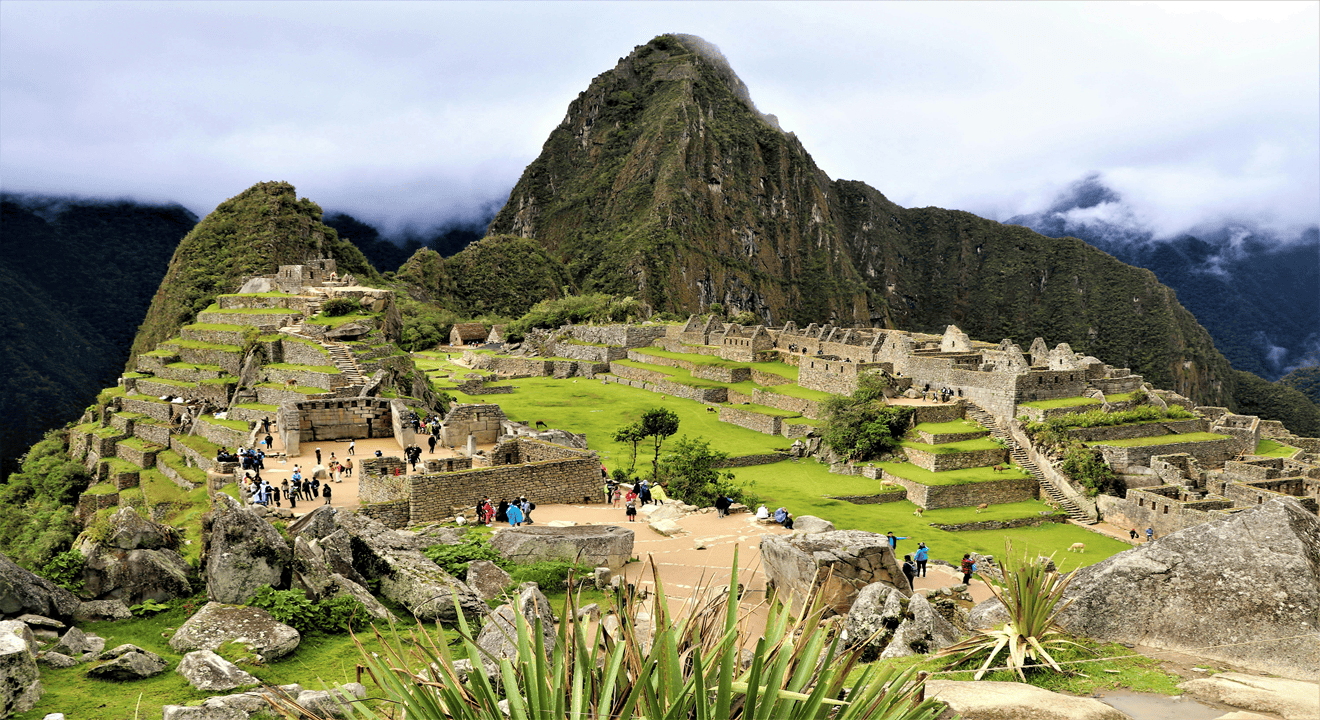
Finally, we arrive at Machu Picchu, the jewel of the entire trek. This Inca citadel is impressive: terraces, temples, and paths that integrate perfectly with the mountain. Every corner has history and mysticism, and the views of the valley and the surrounding mountains take your breath away. It is the moment to explore calmly, take photos, and feel the connection with nature and history that made this place one of the wonders of the world. After all the effort of the journey, arriving here is an unforgettable reward.
What weather to expect on the Salkantay Trek
The weather changes a lot along the route, since it crosses different ecosystems: from the intense cold of the Andean passes (around -5 °C) to the heat and humidity of the jungle (approximately 25 °C). For this reason, it is important to go with layered clothing, sun protection, and waterproof gear, even during the dry season.
- Rainy season (November – April): Greater humidity, frequent rains, and slippery trails.
- Dry season (May – October): Sunny days, clear skies, and optimal conditions for hiking.
¿How demanding is the Salkantay trek?
The trek is accessible for people with moderate physical condition, but it requires preparation:
- Walk 1–2 hours several times a week.
- Cardiovascular exercises such as jogging or spinning 2–3 months before.
Although you do not need to be a professional athlete, the 5-day and 60 km route with altitudes of up to 4,630 masl requires endurance, but the reward is landscapes and experiences that are totally worth it.
Essential equipment for the Salkantay trek
- Proper footwear: Strong, comfortable trekking boots with good grip. Use them before the trip to adapt them to your feet.
- Layered clothing: From breathable clothing to thermal insulation, for sudden temperature changes.
- Rain protection: Waterproof poncho or windproof jacket.
- Sun care: Sunscreen, hat, and sunglasses.
- Hydration: Reusable bottle or Camelbak.
- Energy on the trail: Energy snacks such as bars, nuts, or chocolate.
- Basic first-aid kit: Medicines, bandages, painkillers, and insect repellent.
- Trekking poles (optional): Help on ascents and descents.
- Lighting: Headlamp with extra batteries.
- Memories: Camera or phone with portable charger.
- Cash: For additional expenses or tips.
- Extra thermal layer or light sleeping bag: Useful on cold nights at campsites.
- Light towel or multipurpose scarf: To dry yourself or protect from the sun.
- Dry bag or waterproof covers: To protect clothing and electronics from rain or humidity.
- Emergency whistle: Useful for safety in case of any incident.
- Map or trek guide: To have reference and orientation on the trail.
- Local snacks or dried fruits: As extra energy and to try flavors of the region.
What not to bring on the Salkantay trek
- Unnecessary or overly heavy clothing: Avoid carrying garments you will not use; every kilo counts in the backpack.
- Inappropriate shoes: Do not use canvas shoes, sandals, or footwear without support.
- Unnecessary valuables: Jewelry, expensive watches, or devices you do not need.
- Excess perishable food: Only bring light, energy snacks.
- Large bags or heavy backpacks: Keep your backpack light (30–40 L) to move comfortably.
- Non-essential gear for altitude: Avoid accessories that are not practical for the climate or terrain.
- Heavy books or large electronics: Better to choose digital versions if you want to read.
- Luxury or unnecessary camping items: Such as glass bottles, large utensils, heavy makeup, etc.
- Too many electronic gadgets: Only the essentials: phone/camera, portable charger.
Interesting facts about the Salkantay Trek and Machu Picchu
- The Salkantay Pass reaches 4,650 masl, higher than many peaks in the Alps.
- Nevado Salkantay means “Savage” or “God of the Mountain”; for the Incas, it was a sacred mountain that protected the valley.
- In a single trek, you pass from cold Andean landscapes to warm cloud forest, with temperature changes of up to 30 °C in one day.
- The cloud forest is home to exotic birds, orchids, and giant ferns that are not found elsewhere.
- Llactapata, a forgotten archaeological site, offers the first panoramic view of Machu Picchu and was strategic for the Incas.
- From the Salkantay Pass you can see glaciers and eternally snow-capped mountains, a unique natural spectacle.
- The Salkantay Trek is a less crowded alternative to the Inca Trail, ideal for those seeking tranquility and connection with nature.
- In the high jungle section, water flows through crystal-clear rivers and impressive waterfalls, perfect for photos and rest.
- Along the trek there are plantations of coffee, corn, and potatoes, and communities that maintain ancestral traditions.
- Machu Picchu is not only a World Heritage site, but also a spiritual place that continues to fascinate travelers from all over the world.
We are accredited by