
RAQCHI: THE TEMPLE OF WIRACOCHA IN CUSCO
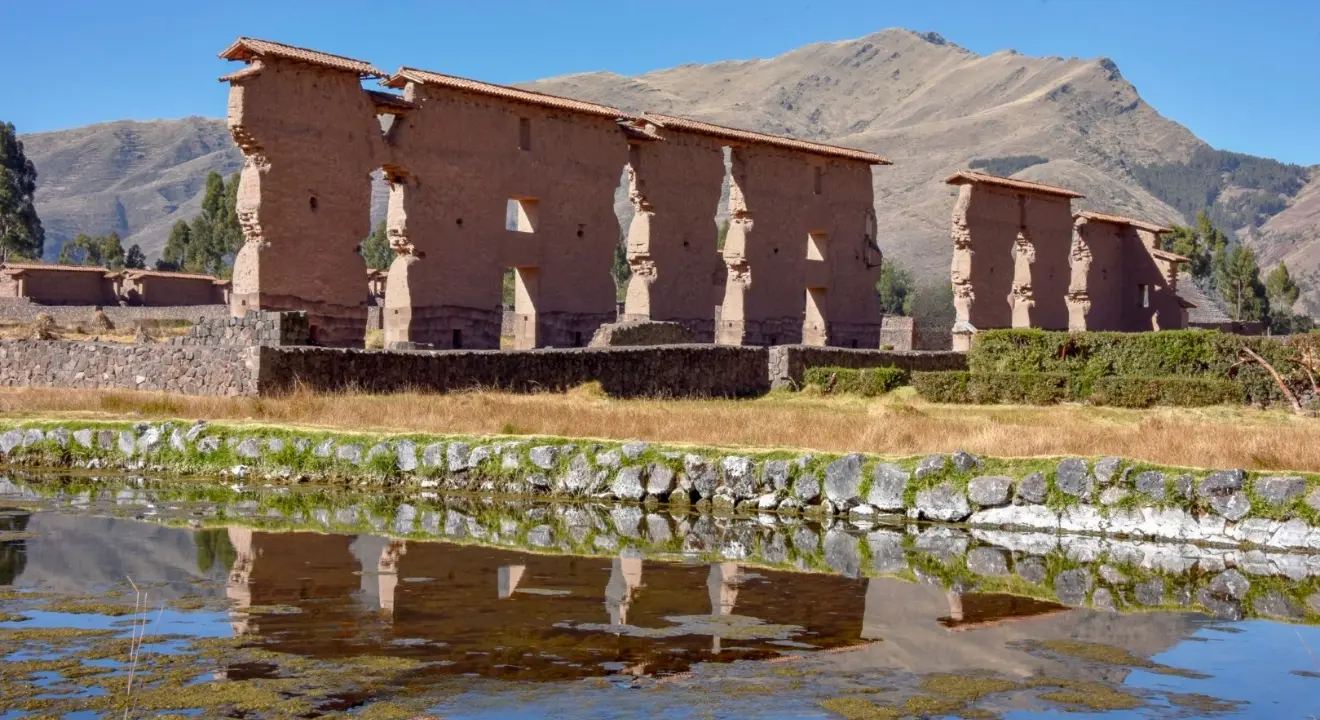
Raqchi, also known as the Temple of Wiracocha, is an impressive archaeological site located in the Cusco region of Peru, on the banks of the Vilcanota River. This complex stands out for its unique architecture within the Inca Empire: massive stone walls, circular adobe columns, and large plazas that reflect the grandeur of Inca civilization. Raqchi is believed to have played an important religious and administrative role, especially dedicated to the worship of the god Wiracocha, considered one of the main deities in the Andean worldview. In addition to its historical value, the site offers panoramic views of the valley and surrounding Andes, making Raqchi a fascinating destination for both history enthusiasts and nature lovers.
History
Raqchi emerged during the 15th century, in the time of the Inca Empire, as an important religious center dedicated to the god Wiracocha, the creator according to the Andean worldview. It was strategically built in the Southern Valley of Cusco, near the Vilcanota River, to take advantage of natural resources and facilitate the arrival of pilgrims. In addition to its religious function, Raqchi also played an administrative and military role: storing food, housing officials, and serving as a regional control point. Its foundation is linked to the reign of Emperor Pachacútec. Although exact records do not exist, it is considered one of the largest and most significant temples of the empire before its expansion into other regions.
Location and Altitude
Raqchi is located in the Southern Valley of Cusco, San Pedro de Cacha district, Canchis province, at 3,550 meters (11,646 feet) above sea level, near the Vilcanota River and the Cusco–Puno route.
How to Get to Raqchi
Raqchi is 120 km southeast of Cusco; it can be reached in 2.5 to 3 hours via the Cusco–Urcos–Sicuani route (Cusco–Puno highway) by bus, colectivo, or private transport, with direct access from the main road.
When to Visit Raqchi
The best time to visit Raqchi is during the dry season, from April to October, when the days are usually sunny and rainfall is minimal, allowing for a more comfortable exploration of the site. May to September offers the best weather conditions, although nights can be cold. During the rainy season (November to March), the landscape is greener, but precipitation may make visiting more difficult.
Raqchi: Main Archaeological Structures
Raqchi is a large archaeological complex that served religious, administrative, military, and logistical functions within the Inca Empire. In addition to its most well-known structures, the site preserves several buildings that reflect its strategic importance.
The Great Sanctuary of Wiracocha
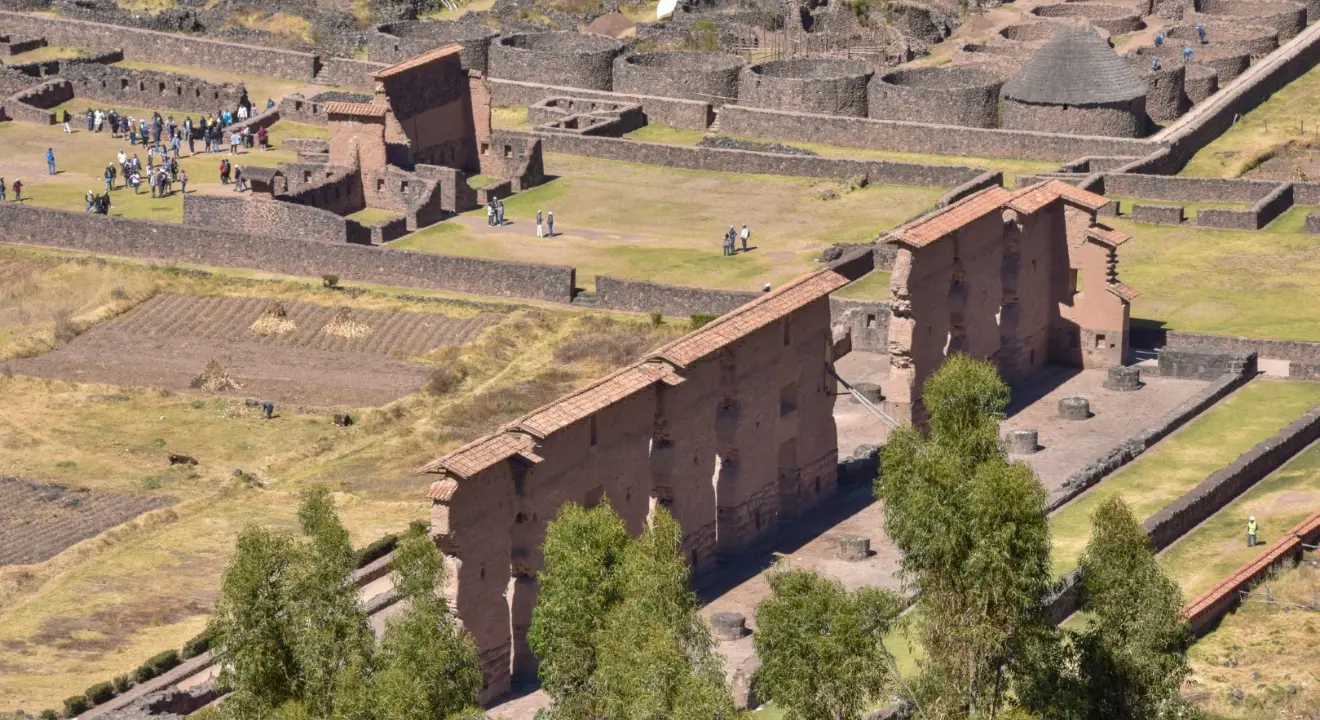
This is the main building of the complex and one of the largest temples built by the Incas. It stands out for its central stone and adobe wall, flanked by columns that supported a massive gabled roof, highlighting its ceremonial character.
Residential Areas
Throughout the complex, groups of rectangular rooms are arranged in an orderly manner. These structures served as housing for priests, officials, and soldiers, as well as temporary administrative spaces.
Colcas and Storage Areas
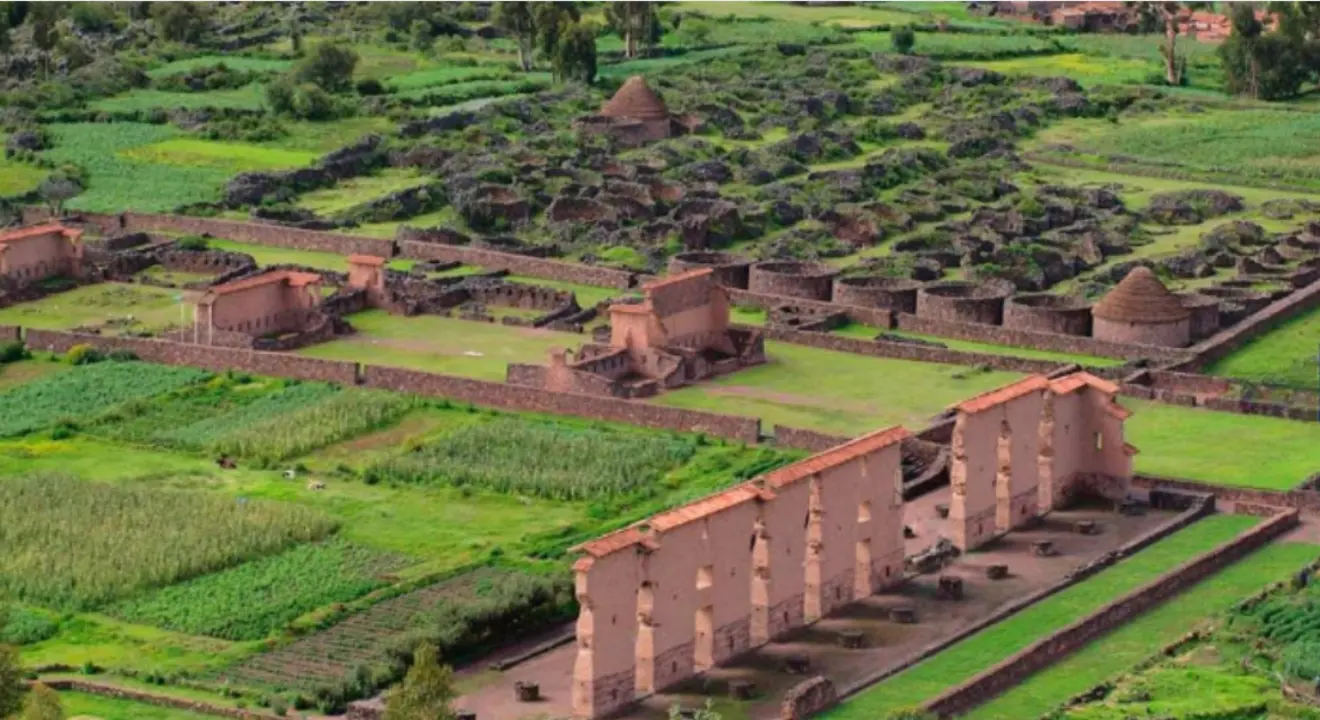
Raqchi has a large number of circular storage structures located in elevated areas to facilitate ventilation. These were used to store grains, tubers, and other products intended to supply the site and travelers passing through the region.
Ceremonial plazas and open spaces
The complex has large esplanades that served as gathering areas, rituals, and public activities, where ceremonies related to the worship of Wiracocha were performed.
Channels and hydraulic system
Raqchi features an advanced system of stone channels that distributed water to fountains and rooms. These works demonstrate the high hydraulic engineering knowledge of the Incas.
The Qhapaq Ñan
The site was directly connected to the Qhapaq Ñan, allowing Raqchi to function as a resting point, control center, and supply station for imperial messengers (chaskis).
Traveler tip: Due to the altitude (3,550 m / 11,647 ft), walk slowly and stay hydrated to avoid altitude sickness.
Dining options near Raqchi
Tourist restaurants are located in Sicuani, the closest town to Raqchi, and are ideal for lunch or dinner after visiting the archaeological site.
1. Restaurant Antika Sicuani
Located near the center of Sicuani, in the Parque Periodista area. It is one of the most frequented restaurants by tourists and tour groups. Offers Peruvian and Andean cuisine, with dishes such as fried trout, grilled chicken, traditional soups, and full lunch menus.
2. Amaru Restobar
Located on a central street in Sicuani, easily accessible. Known for its modern atmosphere and good service. The menu includes dishes such as trout ceviche, schnitzels, wings, meats, and contemporary Peruvian cuisine, ideal for relaxing after the trip.
3. Restaurant Wiracocha
Located in an urban area of Sicuani and a good option to try traditional flavors. Serves typical regional dishes, Andean stews, trout, meats, and local drinks. Its name makes it very appealing for those visiting Raqchi.
4. Restaurant Mikuna
Located on one of the main avenues of Sicuani, it is a small but well-rated restaurant. Offers homemade food with good flavor, such as chicken, meat, soups, and preparations with local ingredients, with good value for money.
5. Caldería Sumac
Located in Sicuani, it is a recommended option for those seeking regional cuisine. Serves traditional Andean dishes, full lunches, and homemade preparations, ideal for tourists who want to try local gastronomy before or after visiting Raqchi.
Recommended hotels in Sicuani
1. Hotel Koricancha Sicuani
- Category: 3 stars
- Description: Hotel with a good location, just 5 blocks from the Sicuani square. Offers buffet breakfast, Wi-Fi, cable TV, and balconies in some rooms. Ideal if you are looking for comfort and reliable service near the center.
- Key services: Breakfast included, Wi-Fi, rooms with balcony, Queen and King beds.
2. Wilkamayu Hotel
- Category: 3 stars
- Description: Well-rated hotel in Sicuani with comfortable rooms, free Wi-Fi, buffet breakfast included, and free parking. Has a bar and cozy common areas, about 15 minutes by car from Raqchi.
- Key services: Buffet breakfast, 24-hour reception, bar, garden, and Wi-Fi.
3. Hotel Hatun Sumac Wasi
- Category: 4 stars (highly rated)
- Description: Cozy hotel with a traditional Andean atmosphere. Offers buffet breakfast with local flavors and a restaurant/restobar with views of the city of Sicuani. Ideal for those seeking a warmer and more comfortable experience.
- Key services: Buffet breakfast, restaurant with local cuisine, Wi-Fi, and decoration with Andean details.
What to bring to Raqchi
- Identity document or passport (may be requested when purchasing entry).
- Sunscreen and sunglasses, the sun is strong due to the altitude.
- Hat or cap for sun protection.
- Light warm clothing, as the weather can change quickly.
- Comfortable shoes or trekking shoes, terrain is uneven.
- Water and light snacks, there are not many shops inside the
- Cash in soles, for entry or local purchases.
- Camera or phone with battery, the views are excellent.
What not to bring to Raqchi
- Heavy luggage or large backpacks, they make the visit difficult.
- Drones, prohibited without special permission.
- Alcoholic beverages inside the archaeological site.
- Speakers or loud music, not allowed.
- Objects that can damage the heritage, such as sticks, paints, or sprays.
- Pets, generally not allowed in archaeological sites.
Curious facts about Raqchi
- The Temple of Wiracocha is one of the largest known Inca constructions; its central wall reached about 20 meters high, something uncommon in Inca architecture.
- Raqchi was an important administrative and religious center, not only a temple but also a strategic point for travelers and Inca messengers.
- The site functioned as a kind of “rest city” for the chaskis, thanks to its direct connection with the Qhapaq Ñan.
- The circular colcas of Raqchi are unique due to their number and size; few Inca cities concentrated so many storage units in one place.
- Unlike other Inca sites, Raqchi used a lot of adobe combined with stone, a rare technique in high mountain areas.
Traveler tip:
If you visit Raqchi early in the morning or at the end of the afternoon, the light better highlights the temple walls, and the place feels much quieter and more special.
We are accredited by